

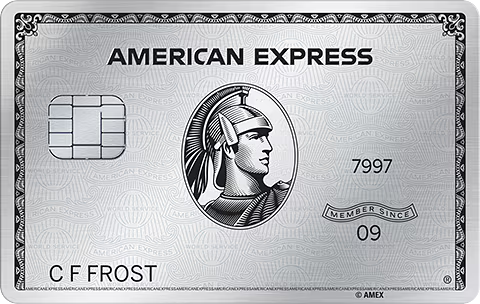
The American Express Gold Card and the American Express Platinum Card both earn Membership Rewards points, but they price and earn differently. As of mid-2026, public materials still list a $325 annual fee on Gold and $895 on Platinum.
Gold is built around elevated earn on dining and U.S. supermarkets plus monthly lifestyle credits. Platinum is built around travel multipliers, airport lounge access, and a wide set of enrollment-based statement credits.
Side-by-side comparison
| Feature | Amex Gold ($325) | Amex Platinum ($895) |
|---|---|---|
| Annual fee | $325 | $895 |
| Dining earn | 4x worldwide (caps/terms apply on some categories) | 1x on ordinary dining |
| U.S. supermarkets | 4x (commonly capped, e.g. $25k/year) | 1x |
| Flights | 3x on Amex Travel / airline paths per terms | 5x on flights booked direct or via Amex Travel (annual cap, e.g. $500k) |
| Prepaid hotels via Amex Travel | Lower multiplier (often 2x class) | 5x prepaid hotels via Amex Travel |
| Other spend | 1x | 1x |
| Lounge access | None | Centurion Lounges, Priority Pass Select, and other network access per guide |
| Foreign transaction fee | None | None |
| Transfer partners | Same Membership Rewards partner list | Same Membership Rewards partner list |
Welcome offers vary by channel and applicant and are omitted here because they change frequently.
How each card is structured
Both are charge-card style American Express consumer products that can include Pay Over Time options depending on account features. Points deposit into one Membership Rewards pool when cards share the same membership, which means earn from Gold and Platinum can combine for transfers to airlines and hotels.
Gold optimizes for everyday category multipliers. Platinum optimizes for travel purchase channels and a benefits bundle that must be enrolled and used to offset the higher fee.
Neither card is a bank debit product. Purchases post to an Amex account with its own payment due structure.
Fees and credit mechanics (as of mid-2026)
Gold credits (enrollment required where noted)
Public Amex Gold materials describe a lifestyle credit stack that can include:
- $120 dining credit ($10/month) at listed partners (for example Grubhub/Seamless, Buffalo Wild Wings, Five Guys, The Cheesecake Factory, Wonder—partner lists change; Goldbelly/Wine.com phase-outs have been announced for parts of this stack)
- $120 Uber Cash ($10/month) when the card is the selected payment method in Uber
- $100 Resy credit ($50 semi-annually) at qualifying U.S. Resy restaurants
- $84 Dunkin’ credit ($7/month) at U.S. Dunkin’ locations
Taken together, those lines sum to roughly $424 in annual credit capacity if fully used on eligible spend. Unused monthly or semi-annual slices generally expire on their schedule.
Platinum credits (enrollment required where noted)
Platinum’s 2025–2026 consumer refresh emphasizes a larger, more specialized stack. Commonly documented annual maxima include:
- Up to $600 hotel credit ($300 semi-annual) on prepaid Fine Hotels + Resorts or The Hotel Collection bookings via Amex Travel
- $200 airline fee credit on one selected airline
- $200 Uber Cash (monthly allotments; December often higher in historical designs)
- Digital entertainment credits (often described near $240–$300/year depending on the current guide)
- $300 Equinox credit (club or Equinox+; auto-renewal terms apply)
- $300 lululemon credit ($75/quarter) at U.S. stores (excluding outlets) and lululemon.com
- $200 Oura Ring credit on eligible direct hardware purchases
- ~$155 Walmart+ membership credit (~$12.95/month class)
- CLEAR Plus credit (often near $199 when offered)
- Global Entry / TSA PreCheck credit on a multi-year cycle
Some older credits (for example certain Saks benefits) have been removed or replaced on announced timelines. Always use the live Card Benefits listing in the Amex account for the operative set.
Interest and other fees
Revolving balances on Pay Over Time plans accrue interest. Late fees and returned-payment fees follow Amex schedules. Authorized user pricing differs: Gold often has no annual fee for additional cards; Platinum commonly charges for additional Platinum Cards (for example a $195 class fee in many disclosures).
How earning differs on a concrete spend mix
Suppose a cardmember spends $15,000 per year on eligible dining and $8,000 at eligible U.S. supermarkets, all coded correctly.
- Gold at 4x produces on the order of 92,000 Membership Rewards points from those categories before caps.
- Platinum at 1x produces 23,000 points on the same purchases.
Reverse the pattern for $10,000 of flights booked in Platinum’s 5x channels: Platinum can produce 50,000 points from that travel slice, while Gold’s flight multipliers are lower outside its listed 3x paths.
Merchant category coding errors (for example warehouse clubs not counting as supermarkets) change outcomes. Caps on supermarket 4x are a hard ceiling.
Lounge access and travel services
Gold has no built-in lounge membership. Platinum includes access to American Express Centurion Lounges, Priority Pass Select, and other networks listed in the guide (including limited Delta Sky Club access patterns that have used annual visit caps and Delta-operated flight rules). Guest policies tightened in 2026 materials for some Centurion Lounge scenarios (same-day flight alignment rules).
Platinum also bundles hotel elite status and travel protections described in the benefits guide. Those are contractual insurance and status products, not cash.
Limits, eligibility, and availability
Both cards require Amex underwriting and are aimed at U.S. consumers (product variants exist internationally under different fees). Annual fee, credits, and lounge rights are U.S. consumer-guide specific in this article.
Credit limits and Pay Over Time eligibility vary. Some Platinum credits require selecting an airline, enrolling in offers, or booking through Amex Travel—constraints that reduce realized value when ignored.
Tradeoffs and constraints
Gold concentrates value in everyday dining and grocery earn plus smaller monthly credits. It does not buy Centurion Lounge access. Partner lists for credits can shrink (restaurant delivery partners have been added and removed before).
Platinum concentrates value in travel booking channels, lounges, and a wide credit bundle that demands tracking. The $895 fee is only partially offset when hotel, wellness, and entertainment credits match real spending. Missed enrollments convert theoretical credit value to zero.
Shared points, different engines. Holding both is a structural way some households cover 4x everyday categories and 5x travel—but it doubles annual fees and complexity. That is a description of product overlap, not an instruction to apply.
Acceptance. Amex merchant acceptance is wide in the U.S. but not universal; some foreign merchants still prefer Visa/Mastercard networks.
Compare the two by mapping fee, earn map, credit enrollment burden, and lounge rights—not by a single “better card” label.
Related: American Express Gold Card review, American Express Platinum Card review.