
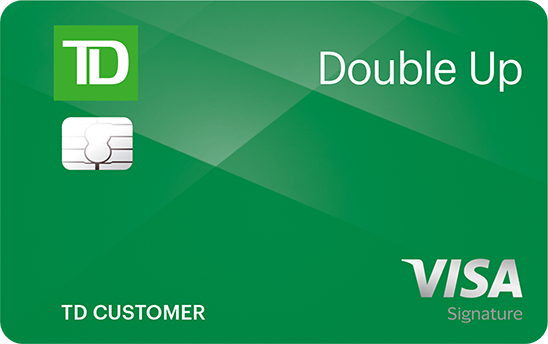
The TD Double UpSM Credit Card is a financial product that utilizes a two-step rewards mechanism. It is issued by TD Bank, N.A., and is designed to incentivize the use of TD’s deposit banking services.
Unlike cards that provide a flat percentage back at the moment of purchase, the Double Up card splits the rewards into an accrual phase and a redemption phase. This “1% + 1%” structure is the primary logic governing the card’s value.
What the TD Double Up Credit Card Is (Overview)
The TD Double Up card is a Visa-branded credit card. It provides a standard revolving credit line and is marketed to individuals who live within TD Bank’s specific regional service areas.
The name “Double Up” refers to the system’s ability to double the base reward rate if the user follows a specific redemption path. If that path is not followed, the product functions as a standard 1% cashback card. This makes the product a “hybrid” between a flat-rate card and a relationship-based card.
As a Visa card, it includes standard consumer protections and network benefits, such as zero liability for unauthorized charges and digital wallet integration. However, the core identity of the card is tied to the TD Bank deposit ecosystem.
How the “1% + 1%” Rewards Mechanism Works
The Double Up rewards engine is programmed with two distinct logic gates that determine the total cashback percentage.
-
Gate 1: The Purchase Reward (1%) When a cardholder makes an eligible purchase, the system automatically awards 1% in cashback. This reward is reflected in the rewards balance once the transaction settles. This gate is “unconditional” for all eligible net purchases.
-
Gate 2: The Redemption Multiplier (+1%) The second 1% is only triggered when the rewards are redeemed. To unlock this additional value, the user must redeem the rewards as a deposit into an eligible TD Bank checking or savings account.
-
Total Calculation (The “Double Up”) When Gate 1 and Gate 2 are combined, the total reward equals 2%. The system effectively “matches” the purchase reward at the time of deposit.
-
Reward Exclusion Logic The system ignores transactions that are not “net purchases.” These include cash advances, balance transfers, lottery tickets, and any fees charged by the bank. If a purchase is returned, the system subtracts the corresponding 1% from the rewards balance, and that amount can no longer be “doubled.”
How Redemption and Deposit Work in the System
Moving value from the rewards balance to a bank account involves specific steps and system constraints.
Eligible TD Deposit Accounts
To trigger the second 1%, the destination account must be a TD Bank checking or savings account. Most consumer accounts at TD Bank qualify, but the system may exclude certain business or specialized brokerage accounts.
Redemption for Statement Credit
Users have the option to redeem rewards as a statement credit to reduce their card balance. However, the system logic for statement credits does not usually trigger the +1% bonus. This means a user who chooses convenience over the deposit path is effectively accepting a lower rewards rate.
Transaction Speed and Posting
Once a redemption request is initiated through the TD Bank app or website, the transfer logic begins. For internal transfers to TD accounts, the funds typically appear within one to two business days. The “doubled” portion is calculated and applied at the same time as the base reward transfer.
How the Card Generates Costs and Geographic Constraints
Every credit product has costs that offset its rewards. The Double Up card has several specific cost mechanisms and a significant limitation on who can apply.
Geographic Availability (The East Coast Lock)
TD Bank operates primarily on the East Coast of the United States. The system’s application logic often uses ZIP code filters to restrict approval to residents of specific states (e.g., Maine to Florida). This makes the card a “regional” product rather than a national one.
Interest and APR Mechanics
The card uses a variable APR for purchases, which is determined by the cardholder’s creditworthiness. Interest is calculated using the average daily balance method. If a user carries a balance, the interest charges will quickly negate the 2% rewards, as the APR is orders of magnitude higher than the rewards rate.
Foreign Transaction Fees
The system applies a 3% fee to any transaction processed in a foreign currency or outside the U.S. This fee creates a net negative return for cardholders traveling internationally, as the 3% cost exceeds the 2% maximum reward.
Practical Implications of the Split Reward System
The “1% + 1%” mechanic changes how a user perceives their rewards. It introduces a “delayed gratification” element to the cashback cycle.
Encouraging Savings Behavior
By requiring a deposit into a savings or checking account to get the full reward, the system nudges users toward building their bank balances rather than just reducing their credit card debt. This aligns with the “relationship banking” strategy common among large retail banks.
Comparison to 2% Flat-Rate Cards
Compared to a card that gives 2% at the moment of purchase (like the Wells Fargo Active Cash), the TD Double Up is more “rigid.” The user must perform an extra step (the specific deposit) to achieve the same mathematical outcome.
Impact on Banking Choice
For existing TD Bank customers, the card is a low-friction addition. However, for a user who does not have a TD bank account, the system’s requirement to open a new account just to “double” the rewards is a significant barrier to entry.
Tradeoffs, Risks, and Limitations
The TD Double Up card has several constraints that distinguish it from its competitors in the 2% cashback space.
- Limited Flexibility: The standard redemption path is forced into the banking side of the business.
- Minimum Redemption Amounts: The system may require a minimum rewards balance (e.g., $25) before any redemption—and thus any “doubling”—can occur.
- Reward Forfeiture: If a user closes their TD Bank deposit account before redeeming their card rewards, they may lose the ability to “double up” their existing balance.
- No Category Boosts: Like most 2% cards, this is a “workhorse” card with no special multipliers for dining, gas, or travel.
Regional and Regulatory Differences (United States)
The card is a U.S. consumer product regulated under federal law, including the Credit CARD Act of 2009. These laws govern how the bank can change interest rates and how they must disclose the costs of the credit line.
The regional nature of TD Bank means that the “available market” for this card is smaller than that of national issuers like Citi or Wells Fargo. This is a business strategy where the bank focuses on deep relationship-building in specific geographic clusters rather than thin national coverage.
Common Misconceptions About the Double Up Card
“It’s a flat 2% card.” It is only a 2% card if you redeem into a TD Bank account. Otherwise, it is effectively a 1% card.
“I can double my rewards for a statement credit.” This is a common point of confusion. The system’s “Double Up” logic is specifically tied to the deposit mechanism. Cardholders should check their specific program terms for any updates to statement credit rules.
“It’s available everywhere in the U.S.” TD Bank’s system is historically regional. While they may accept applications from outside their footprint, the probability of approval and the availability of the required deposit accounts are much higher within their service states.
“Returns only cost me 1%.” If you return a purchase, the system removes the 1% accrual. Since that 1% can no longer be “doubled,” you are effectively losing out on the 2% you would have otherwise received.