

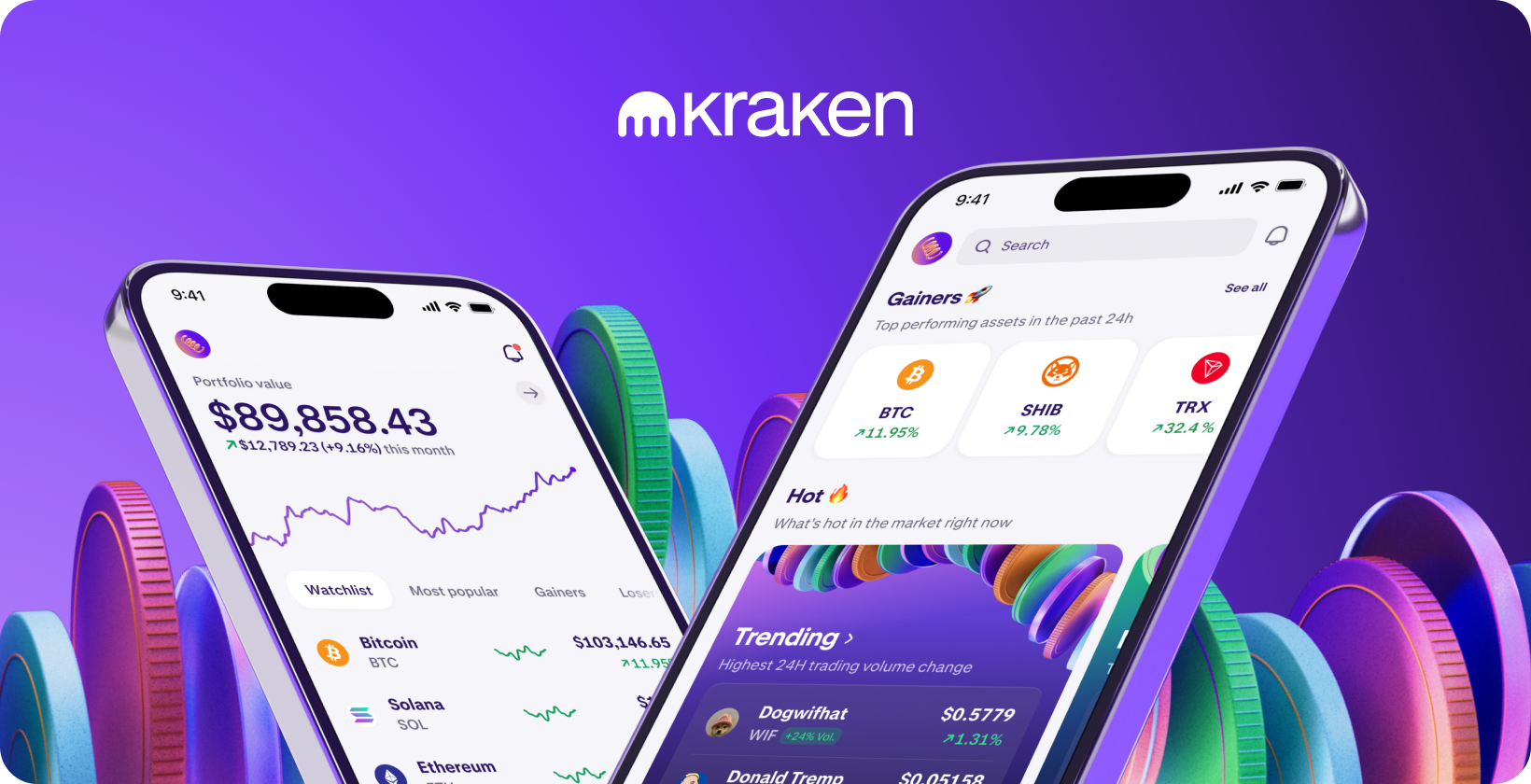
Kraken operates as a centralized cryptocurrency exchange that provides infrastructure for spot trading, derivatives, and digital asset custody. Established in 2011, the platform is one of the oldest entities in the industry, serving retail and institutional participants across multiple global jurisdictions.
The system facilitates the exchange of fiat currencies, such as the U.S. Dollar and Euro, for various blockchain-based assets through a centralized execution engine.
At a glance
- Regulatory Status: Registered with FinCEN as a Money Services Business (MSB) and holds multiple state-level money transmitter licenses.
- Security Logic: Emphasizes technical security features like Global Settings Lock (GSL) and regular proof-of-reserves audits.
- Trading Model: Uses a centralized order book with a maker-taker fee schedule that incentivizes liquidity provision.
- Asset Custody: Employs a tiered storage model, keeping the vast majority of assets in geographically distributed cold storage.
- Market Access: Provides varying levels of leverage and product availability based on the user’s jurisdiction and verification level.
How does Kraken match and execute buy and sell orders?
At the core of the Kraken system is a high-throughput matching engine that connects buyers and sellers in real-time. When a user submits an order, it is placed into a centralized order book, which ranks entries based on price and time of arrival.
The price of an asset on the platform is determined by the highest price a buyer is willing to pay (the bid) and the lowest price a seller is willing to accept (the ask). The engine identifies instances where these prices overlap and executes the trade immediately. If no immediate match is found, the order remains in the book until a counterparty arrives or the user cancels the request.
Kraken classifies participants into two categories for fee and execution purposes: makers and takers. Makers contribute to market depth by adding orders that do not match immediately. Takers consume this depth by matching against existing orders. This duality ensures that there is always a searchable record of available liquidity, though execution prices can fluctuate significantly during periods of low volume or high volatility.
Why is proof of reserves used for verification?
Unlike traditional banks, which often operate on a fractional reserve system, Kraken utilizes a “Proof of Reserves” (PoR) methodology to demonstrate that it holds sufficient assets to cover all customer liabilities. This process is conducted periodically by independent third-party accounting firms.
The PoR mechanism involves a cryptographic verification known as a Merkle Tree. This structures all customer account balances into a single, encrypted root hash. Users can then use their unique account identifiers to verify that their specific balance was included in the audit without exposing their private data or the total holdings of the exchange.
While PoR provides a snapshot of the exchange’s solvency at a specific point in time, it does not function as a continuous audit. It also does not account for the exchange’s external liabilities or operational debts. It is primarily a tool for verifying that the custodial assets are physically present and accounted for within the platform’s storage systems.
How does the storage architecture protect digital assets?
Kraken manages asset security through a tiered storage system designed to balance immediate liquidity with long-term protection. The majority of customer funds—typically over 95%—are kept in “cold storage.” This refers to air-gapped hardware wallets that are never connected to the internet, making them immune to remote cyberattacks.
The cold storage facilities are geographically distributed and require multi-signature authorization for any movement of funds. This means that no single individual or office can authorize a large withdrawal from the primary reserves.
The remaining assets are kept in “hot wallets,” which are connected to the internet to facilitate immediate user withdrawals and platform trading. To protect these online funds, the exchange utilizes automated security monitors and rate-limiting protocols that flag unusual withdrawal patterns. This multi-layered approach is intended to mitigate the risks inherent in centralized custody, though it still requires users to trust the platform’s internal security management.
What determines the cost of trading on Kraken?
Trading costs on Kraken are primarily governed by a volume-based maker-taker fee schedule. This structure is designed to reward active traders who provide liquidity to the market. Fees are calculated as a percentage of the total trade value and are adjusted every 30 days based on the user’s rolling trading volume.
| 30-Day Trading Volume | Maker Fee | Taker Fee |
|---|---|---|
| $0 – $10,000 | 0.25% | 0.40% |
| $10,001 – $50,000 | 0.20% | 0.35% |
| $50,001 – $100,000 | 0.14% | 0.24% |
| $100,001 – $250,000 | 0.12% | 0.22% |
In addition to trading fees, the platform charges for fiat deposits and withdrawals, though these costs vary significantly depending on the bank and the transfer network used (e.g., ACH, Wire, SEPA). Large fiat withdrawals often involve a fixed fee, while small deposits may be free if using standard bank transfer protocols.
Kraken also offers an “Instant Buy” feature for retail users who prefer simplicity. This interface does not use the order book and instead charges a higher spread and a flat percentage fee, making it a more expensive option compared to the Kraken Pro trading interface.
How do account tiers and verification affect access?
Access to Kraken’s features is restricted by a tiered verification system that complies with global Anti-Money Laundering (AML) and Know Your Customer (KYC) regulations. The level of information a user provides determines their deposit and withdrawal limits, as well as their access to specific products like margin or futures trading.
- Starter: Requires basic name, email, and address. This tier is limited and does not support fiat currency funding in most jurisdictions.
- Intermediate: Requires government-issued ID and proof of residence. This is the standard level for most individual users, unlocking fiat deposits and higher withdrawal limits.
- Pro: Requires additional financial disclosure and source-of-wealth documentation. This tier is designed for institutional clients and high-net-worth individuals who require the highest available limits.
Verification times vary based on the queue and the clarity of the documentation provided. While automated systems can often verify an “Intermediate” account within an hour, “Pro” level applications typically involve a manual review that can take several business days to complete.
What are the tradeoffs and limitations?
Operating within a centralized system like Kraken creates several distinct tradeoffs between convenience and control.
Custodial Risk. The exchange acts as the legal custodian of user assets. This means that if the platform encounters legal challenges, regulatory freezes, or technical failures, users may lose immediate access to their funds. Unlike traditional bank deposits in many countries, cryptocurrency balances on an exchange are generally not insured by the government.
Execution Complexity. While the high-speed matching engine provides liquidity, it does not guarantee a specific price during times of market stress. In highly volatile periods, the price can move faster than an human user can react, potentially leading to “liquipedations” for users who have taken leveraged positions.
Privacy and Compliance. To use the platform, participants must sacrifice the pseudonymity inherent in blockchain technology. Every transaction is linked to a verified identity, and the exchange is required by law to monitor and report activity that meets certain regulatory thresholds.
Common questions
How long do fiat withdrawals take?
Withdrawal times depend on the banking network. SEPA and ACH transfers typically settle within 1–3 business days, while domestic wire transfers may clear within 24 hours if initiated during banking business hours.
Can I trade with leverage on Kraken?
Yes, but availability depends on your jurisdiction. U.S. residents face stricter limitations on margin and futures trading compared to users in Europe or Asia. You must check your account’s “Pro” status and local regulations to see which leveraged products are enabled.
What is the Global Settings Lock (GSL)?
The GSL is a security feature that allows users to “freeze” their account settings for a predetermined period. This prevents a secondary attacker from changing withdrawal addresses or security settings even if they gain access to the account credentials.
Common misconceptions
“Proof of Reserves means my money is guaranteed.” PoR only proves that the exchange holds the assets it says it does at the time of the audit. It does not protect against market crashes, poor management, or external liabilities that the audit might not cover.
“I own my coins when they are on Kraken.” When you hold assets on a centralized exchange, you own a claim to those assets, but the exchange controls the actual private keys. To own them in the technical sense, you must move them to a wallet where you alone control the access keys.
“Fees are only charged when I trade.” While trading fees are the most visible cost, users must also account for withdrawal fees, which vary by cryptocurrency, and “funding” fees if they are using margin or futures positions.