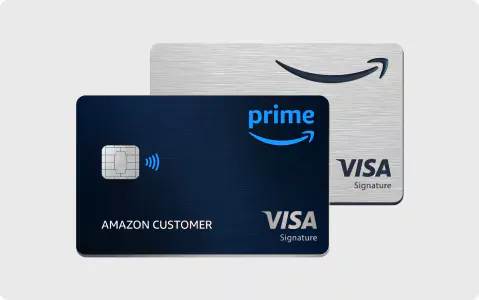

A card reward is a payment from the issuer to the cardholder after a purchase posts. The issuer funds that payment from the economics of the transaction, including interchange, fees, and interest. The reward rate on a marketing page is not the interchange rate.
The interchange numbers below are from the Visa U.S. interchange schedule with rates effective April 18, 2026. They are Visa’s rows, not a blended “1.5% to 3%” estimate.
What problem does the rewards ledger solve?
A merchant pays a merchant discount to its acquirer. The acquirer pays interchange to the issuer under the network’s schedule. Visa’s schedule describes interchange as a fee between financial institutions. It is not a fee the cardholder sees on a receipt.
The issuer then credits the cardholder under the card’s reward rule. A 2% cash-back rule and a 1-point-per-dollar rule are issuer rules. They are not rows on the Visa schedule. An issuer can pay a reward that is higher or lower than the interchange on that sale. Interest and annual fees are other inflows on the same account.
The ledger has three payments. The cardholder pays the merchant. The merchant’s acquirer pays interchange toward the issuer. The issuer pays the reward to the cardholder. APR and interest are the cost when the cardholder revolves a balance instead of paying it. The primary source of revenue for credit card rewards is the Interchange Fee. Visa’s USA Interchange Reimbursement Fees, effective April 18, 2026, describe interchange as a transfer fee between financial institutions. The same document says merchants pay a merchant discount to their own institution, and that discount can include interchange.
- The Revenue Pool: On that schedule, card-present retail “Product 2” consumer credit runs from 1.51% + $0.10 for “All Other Products” to 2.30% + $0.10 for Visa Infinite Spend Qualified. Non-qualified consumer credit is 3.15% + $0.10. Card-present restaurant rates are 2.10% or 2.60%, with a $0.04 minimum, depending on the product column.
- The Rewards Payout: A cash-back offer is paid by the issuer from revenue that includes this interchange. The schedule does not set one cash-back percentage for every card.
- High-Volume Models: The same retail row is higher for Visa Infinite Spend Qualified than for All Other Products. That product gap is one reason a premium Visa tier can fund a larger reward than a basic product.
A category bonus that sits above the interchange on that merchant’s row is not covered by that row alone.
The reward is an issuer credit. Interchange is a network fee between banks.
What actually happens when a purchase posts?
The terminal sends an authorization with an amount and a merchant category code. The issuer approves or declines. When the transaction clears, the MCC and the product type select an interchange row.
- Redemption Inefficiency: Many users earn points but never redeem them. This is known as “breakage.” For the bank, breakage is pure profit.
- Perceived Value vs. Actual Cost: An issuer can post a point value that differs from the wholesale price it pays an airline or hotel partner. Visa’s interchange schedule prices the card transaction. It does not publish that wholesale price. This creates a “spread” where the user feels they are getting more value than the bank is actually paying out.
- Encouraging Stickiness: Points create an ecosystem. If a user has 100,000 points with one bank, they are far less likely to switch to a competitor, even if that competitor offers a slightly better cashback rate.
On Visa’s April 18, 2026 schedule, card-present retail Product 2 runs from 1.51% plus $0.10 for All Other Products to 2.30% plus $0.10 for Visa Infinite Spend Qualified. Non-qualified consumer credit on that schedule is 3.15% plus $0.10. Card-present restaurant rates are 2.10% or 2.60%, with a $0.04 minimum.
Those rows are not the reward. A card that earns 1 point per dollar on every purchase earns that point on a restaurant sale and on a retail sale. The interchange on the two sales can still differ because the MCC differs.
The issuer posts the reward after clearing, under its own rule. A return reverses the reward when the issuer’s rule says it does. The interchange row can also reverse.
- Dynamic Rewards: A card that offers a higher dining earn rate uses the MCC to determine if a transaction qualifies. If a bakery is coded as a “Grocery Store” (MCC 5411) rather than a “Restaurant” (MCC 5812), the software will not award the dining bonus.
- Merchant Agreements: Banks often negotiate a separate earn rate with a named retailer. That earn rate is a contract term. It is not the interchange cell on the Visa schedule for that merchant’s category.
The purchase creates an interchange event and a reward event. They are calculated from different tables.
Where the money, the code, and the points move
The merchant discount can be larger than interchange. The difference covers the acquirer’s fee and network assessments. The cardholder does not pay the merchant discount as a separate line. The cardholder pays the purchase price, plus a foreign transaction fee if the card charges one.
- Cashback: A cash redemption converts points at a rate the issuer sets. The Visa interchange schedule does not publish that conversion.
- Travel Portals: Booking through the issuer’s own portal uses a conversion the issuer posts for that portal. The network schedule does not set it.
- Transfer Partners: Moving bank points into an airline or hotel program uses the partner’s award chart. The cent value of that award is not a figure in the Visa interchange schedule.
The MCC is the switch. Merchant category codes explain how Visa assigns the code from the merchant’s business. A grocery item bought at a discount store carries the discount store’s code. A reward rule that looks for a supermarket code does not see a supermarket.
Points are a unit the issuer invents. Cash back is a unit in dollars or a statement credit. A point redeemed at 1 cent is a cash-equivalent redemption. A point transferred to an airline follows the airline’s award chart, which the card schedule does not set. The Visa interchange PDF does not list a cents-per-point value for any issuer.
Money moves from the merchant’s acquirer toward the issuer as interchange. Points move from the issuer to the cardholder as a reward balance. The two movements are not the same size by definition.
What it costs and where it leaks
The cardholder’s cost is interest if the balance revolves, an annual fee if the card charges one, and a foreign transaction fee if the card charges one. A reward of 2% does not cancel a 3% foreign fee. The fee is larger than the reward on that purchase.
The merchant’s cost is the discount rate, of which interchange is one component. A reward-rich card and a plain card can generate different interchange on the same MCC, because the schedule prices Visa Infinite and “all other products” on different rows. The Product 2 gap above, 1.51% plus $0.10 versus 2.30% plus $0.10, is that product gap on card-present retail.
Leakage for the cardholder is a reward that does not post. Excluded MCCs, returns, cash-like transactions, and balances the issuer classifies as cash advances sit outside many reward rules. The agreement lists them. The interchange schedule is not that list.
The published reward rate is the issuer’s credit. The published interchange rate is the network’s fee. Subtracting one from the other is not a complete account of either side.
What can break or delay the reward?
A delayed clearing record delays the reward, because the issuer posts from the cleared transaction. An authorization that never clears does not become a reward.
A miscoded MCC pays the rate for the code that cleared, not the rate for the item the cardholder bought. A correction requires the acquirer to change the merchant’s code or the issuer to adjust the reward. Neither step is automatic.
A redeemed point can be worth a different amount on a different day if the redemption path is an award seat. The interchange on the original purchase does not change when the award chart changes. The two prices are uncoupled after the reward posts.
A revolved balance adds interest at the APR. On a large enough balance, the interest exceeds the reward posted in the same cycle. The reward rule does not waive the APR.
The reward posts if the transaction clears and the issuer’s rule includes it. The MCC, the product type, and the agreement decide which of those conditions hold.