

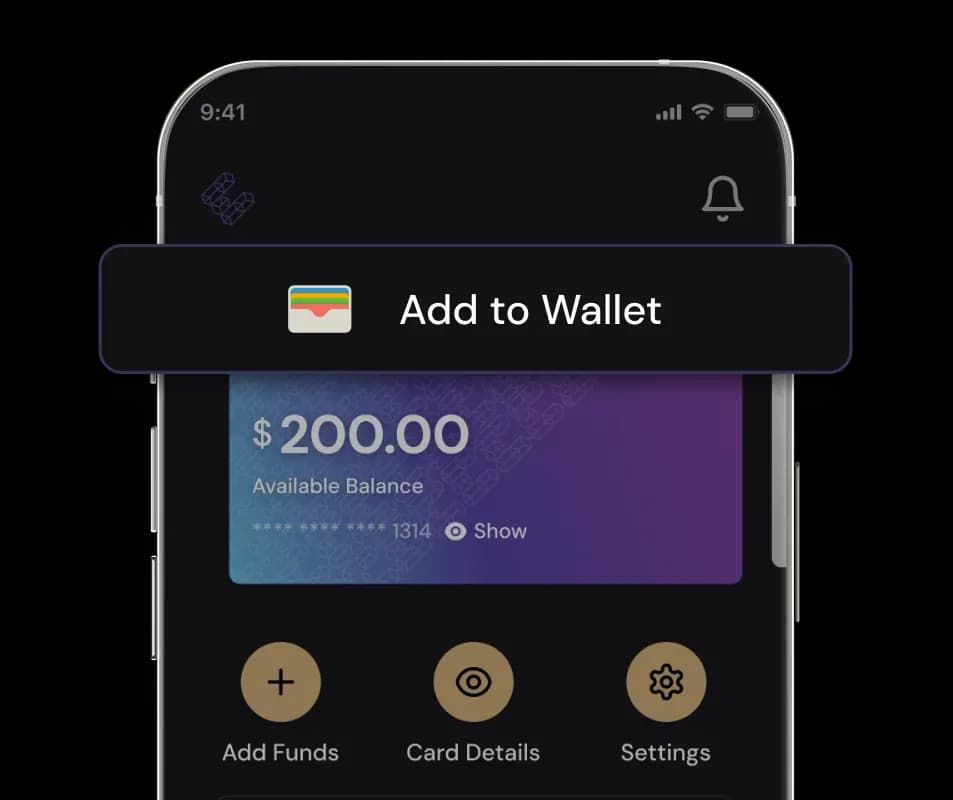
ether.fi Cash is a non-custodial crypto payment product integrated with the Visa network. Card spend draws on a subscriber-controlled smart-contract account rather than a pooled corporate deposit. The help center, updated in October 2026, pays card, trade, and borrow cashback in ETHFI.
The product is operated by ether.fi, a protocol known for liquid staking and related DeFi infrastructure. Revenue comes from interchange-related economics, borrow activity, and protocol fees around staking. Cashback is a token credit, so the dollar value moves with the ETHFI price after the purchase clears.
How is ether.fi Cash structured as a payment product?
ether.fi Cash is structured around a subscriber-controlled account, not a pooled bank deposit. The membership-protection page describes coverage against certain unauthorized exploits of ether.fi account smart contracts. That coverage is underwritten insurance with a cap, and it is not deposit insurance.
Permissioned card flows can pull funds when a Visa authorization succeeds. If the ether.fi interface is unavailable, the account is still a smart-contract balance the subscriber controls with their own keys. Open contracts reduce, but do not remove, smart-contract risk.
The design aims to provide card utility while leaving key control with the subscriber. Identity checks for the Visa program still apply. A lost recovery method is not something the company can reset like a bank password.
How do the spending and borrowing mechanisms function?
The card supports two configurations: Direct Pay and Borrow.
In Direct Pay mode, the card behaves like a debit product. Supported stablecoins are pulled from the account to settle the merchant’s currency through the processor.
| Card mode | Funding | Settlement path | Reward while spending |
|---|---|---|---|
| Direct Pay | Stablecoin balance | Card pull from the account | Card cashback in ETHFI after clearing |
| Borrow | Loan against staked collateral | Stablecoin borrow for card spend | Borrow cashback in ETHFI, separate from the card bands |
In Borrow mode, the card spends against collateral instead of requiring the full purchase to sit in stablecoins first. The help center treats borrow activity as cashback-eligible, with the same seven-day lock as card cashback. A live borrow APR and a single loan-to-value cap are not published on the cashback or membership pages fetched in October 2026. Those figures sit in the app and the vault terms.
Price moves in the collateral change how much borrow capacity remains. If collateral value falls through the contract’s liquidation line, the position can be closed to repay the loan.
What fees, tiers, and rewards does the Cash card apply?
Membership levels on the benefits page updated in October 2026 are Core, Luxe, Pinnacle, and VIP. The page does not publish a points price for each level. Cashback is banded by monthly spend, and it is paid in ETHFI, not as a USDC credit.
Card cashback moves through four stages. It is pending in dollar terms at authorization, converts to ETHFI when the purchase clears, locks for seven days, and then can be claimed to the account.
| Membership | USD band at the highest rate | Next USD band | Above that | EUR residual note |
|---|---|---|---|---|
| Core | 3% on the first $2,000 | 1% from $2,001 to $3,000 | 0.5% | 0.1% above $1,500 equivalent |
| Luxe | 3% on the first $10,000 | 1% from $10,001 to $20,000 | 0.5% | 0.1% above $6,000 equivalent |
| Pinnacle | 3% on the first $50,000 | 1% from $50,001 to $80,000 | 0.5% | 0.1% above $26,000 equivalent |
| VIP | 4% on the first $50,000 | Not listed on the benefits table | Not listed | 4% on the first $16,000 equivalent |
USD and EUR share one monthly spend counter. Each purchase is rated on its own currency ladder. The cashback article describes a 0% FX benefit on EUR purchases, which is why the EUR ladder is shorter and the residual rate is 0.1%.
ATM withdrawals, cash equivalents, peer-to-peer transfers, gift cards, and several financial merchant codes do not earn cashback. A refund can reverse the cashback that was attached to the original purchase.
The ATM limits article lists the same cash cap for every tier: $1,000 per withdrawal, five withdrawals in a rolling 24 hours, and $5,000 in that window. The membership page lists free ATM withdrawals, up to 10 a month, on higher tiers. ATMs in North Korea, Iran, and Myanmar are blocked.
Account-balance protection caps on that membership page are $10,000 for Core, $50,000 for Luxe, $100,000 for Pinnacle, and $500,000 for VIP. The page says the cap is a maximum available amount, and that market losses and compromised credentials are outside the cover.
Who is eligible for the card and what are the limits?
Eligibility requires KYC through the card partners. Availability spans many countries and is subject to local restrictions. A non-custodial vault does not remove identity checks on Visa rails.
The published spend constraint that is numeric in the October 2026 help center is the cashback ladder, not a single retail daily cap. Authorizations can still decline when the balance or the borrow limit is too low. Borrow capacity moves with collateral value.
What are the tradeoffs, risks, and limitations?
Borrow mode introduces liquidation risk when collateral prices fall. Self-custody means lost recovery material can mean permanent loss of account access. The company cannot reset a seed phrase.
Cashback in ETHFI adds token-price risk to a rebate that was calculated in dollars at authorization. The seven-day lock sits between clearing and a claim. Support is digital rather than branch-based.
Stablecoins and staked assets do not carry FDIC-style deposit insurance. The account-protection program is a separate, capped policy. Once a Visa authorization clears, reversal depends on network and issuer dispute rules, not on an on-chain refund alone.
Common questions
Is ether.fi Cash a debit card or a credit card?
It is a Visa product that can operate like a debit card in Direct Pay mode or like a collateralized line in Borrow mode.
Is cashback paid in dollars?
No. The help center says qualifying card, trade, and borrow activity earns ETHFI. The dollar amount is the calculation unit before conversion at the clear price.
What happens if staked collateral drops in Borrow mode?
Borrow capacity shrinks as collateral value falls. If the position crosses the contract’s liquidation threshold, collateral can be sold to repay the debt.