
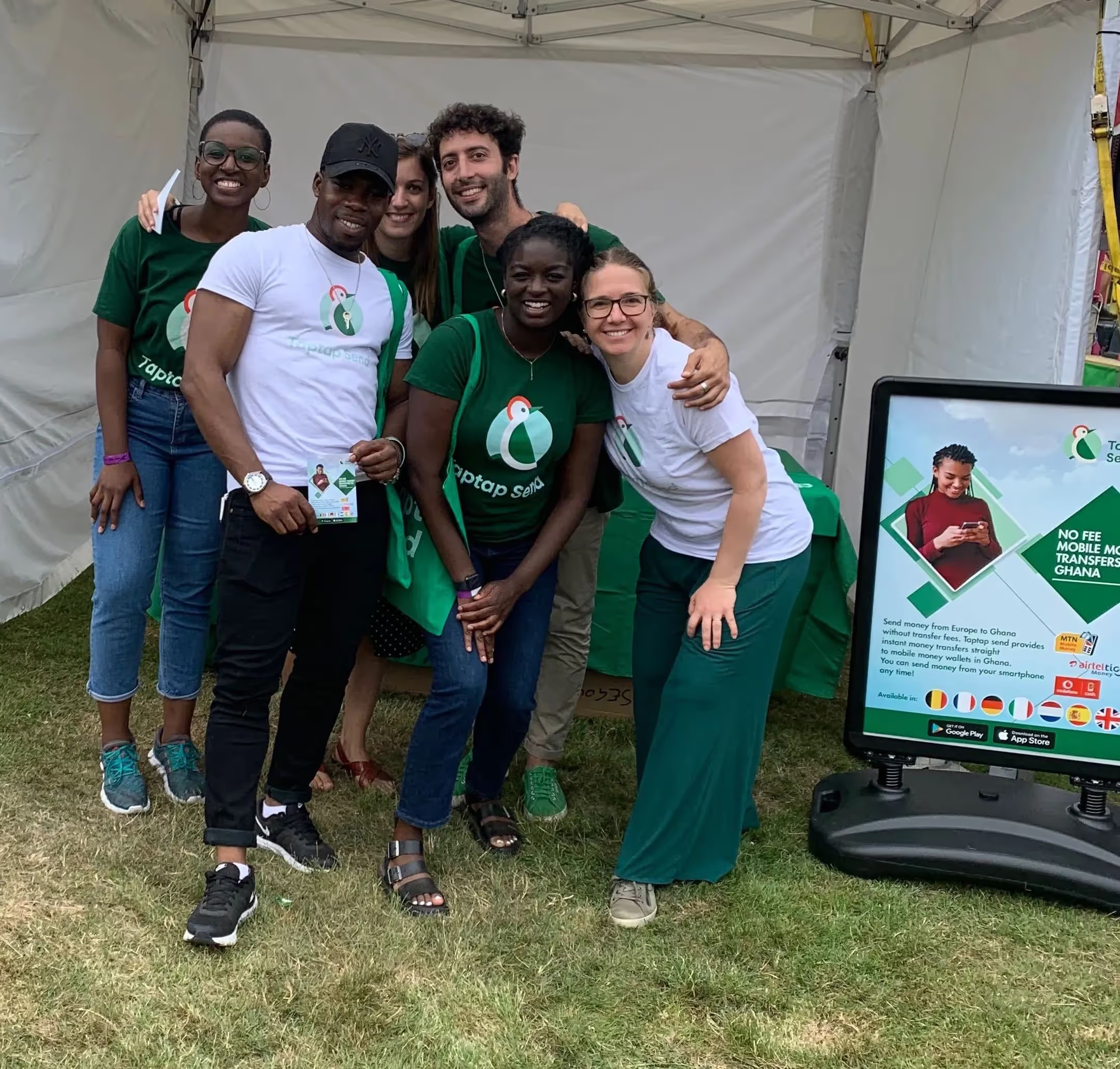
TapTap Send is a remittance app for transfers from licensed sending countries to local payout partners. The sender pays in the iOS or Android app.
A local partner pays the recipient by bank deposit, mobile wallet, or cash pickup. The US sending guide, updated 25 August 2026, says most transfers arrive within minutes.
How is TapTap Send structured as a mobile remittance service?
TapTap Send is a licensed money transmitter that collects funds in the sending country and pays the recipient through a local partner. The US user agreement says TapTap Send is not a bank and does not provide banking services. The sender starts the transfer in the mobile app.
In the United Kingdom, the user agreement names Taptap Send UK Limited, company number 10416468, as an electronic money institution. Its FCA firm reference number is 900842.
In the United States, TapTap Send Payments Co. is registered with FinCEN as a money services business, MSB number 31000306745734. Its NMLS ID is 2108069. The company licenses page, last updated 14 July 2026, lists those US registrations.
That page also names other local entities. Taptap Send Payments Canada Inc. is registered with FINTRAC under number M21060579. Taptap Send Australia Pty Ltd holds Australian Financial Services Licence No. 559468.
Taptap Send (DIFC) Limited is authorized by the DFSA under firm reference F007317. T T S Financial Services Middle East L.L.C. is licensed by the Central Bank of the UAE.
Taptap Send New Zealand Limited appears on the financial service providers register under FSP1009831. The page says that registration is not a remittance license.
The US user agreement describes an optional deposit wallet at Lead Bank, Member FDIC. It says the wallet may provide access to federal deposit insurance.
The same agreement says a sender can submit a remittance without opening a wallet. A card-funded transfer that never sits in that wallet stays a money transmission.
How do TapTap Send transfers and payouts function?
A transfer starts when the sender picks a country, a payout method, and an amount in the app. In the United States, the sending guide says payment is by debit card, including Discover.
The same guide lists a TapTap Send wallet as a payment method when the app shows it. The Europe and UK guide adds Sofort in Germany and Austria, Bancontact in Belgium, and iDEAL in the Netherlands, alongside debit cards.
The app shows the exchange rate, any transfer fee, and the recipient amount before confirmation. A sender in a licensed US state can pick Kenya and M-Pesa. The Kenya line on the fees page adds no transfer fee, and the app still shows a live exchange rate before confirmation.
Payout follows the partner list for that country. The Kenya help page lists M-Pesa, Airtel mobile money, and bank transfers to all banks in Kenya.
The fees page lists BKash, Nagad, bank transfer, and bank cash pickup for Bangladesh. The US sending guide describes bank accounts, mobile wallets, and cash pickup. It names 80 or more countries in Africa, the Americas, Asia, Europe, and the Middle East.
A transfer above the recipient wallet limit does not go through. The mobile-money provider sets that cap. TapTap Send does not publish one wallet cap for every corridor.
What fees and exchange rates does TapTap Send apply?
TapTap Send prices a corridor with a posted transfer fee, a margin inside the exchange rate, or both. In most countries, its fees page says it charges no transfer fee and charges a small percentage on the exchange rate. It does not publish that percentage as one fixed number.
A cost article says the company earns a small amount on the gap between the partner rate and the customer rate. The app shows the customer rate and any fee before confirmation. A recipient provider or a foreign tax can still reduce the amount the recipient gets.
The fees help page is the corridor schedule. The rows below are US examples from that page as of October 2026.
| US destination | Transfer fee on the fees page |
|---|---|
| Kenya | No transfer fee. Exchange-rate percentage only. |
| Nigeria | No transfer fee. Exchange-rate percentage only. |
| India | $1.99 |
| Bangladesh, BKash or Nagad | $0.99 |
| Bangladesh, bank transfer | $1.49 |
| Bangladesh, bank cash pickup | $2.99 |
Other routes use their own amounts, and some use bands that rise with the amount sent. The confirmation screen states the rate and any fee for the corridor and payout method the sender selected.
Who can use TapTap Send and what are the sending limits?
Eligibility follows the sending country and, in the United States, the state license. The Europe and UK guide lists 25 sending countries, including the United Kingdom, Germany, France, Spain, and Norway.
A US account requires residency in a licensed state. The sender has to be physically in a licensed state to open the account.
The US guide updated 25 August 2026 says the service is not yet available in Nevada or the US Virgin Islands. It marks Puerto Rico and the District of Columbia as available. The UK user agreement sets a minimum age of 18.
US verification asks for a photo ID and a selfie. Accepted documents on that guide include a US passport, a US passport card, a US driving license, and a US permanent resident card.
The guide also lists a military ID, an employment authorization card, and a refugee document. Some destination-country passports are the stated exception to the US-document rule.
The US sending guide publishes these standard limits.
| Sending from | Per transfer | Daily limit | 14-day limit |
|---|---|---|---|
| Most US states | $10,000 | $10,000 | $24,000 |
| New Mexico and Oklahoma | $999 | $999 | Not published |
Destination providers can set a lower cap than those US figures. A fixed sending limit can also ask for source-of-funds documents, such as a payslip or a bank statement, after ID verification. If the sender does not provide them, sending resumes when that time window passes.
What risks and operational tradeoffs does TapTap Send carry?
Funding methods in the sending guides are debit cards and, where the app offers it, the US wallet. The Europe and UK guide lists Sofort in Germany and Austria, Bancontact in Belgium, and iDEAL in the Netherlands. Cash pickup on the fees page is how some recipients collect money.
The UK user agreement allows a delay or a refusal while identity is checked. It also allows a delay after a security alert or when a service provider is down.
The US sending guide says a sender can cancel within 30 minutes of sending if the funds have not been delivered. It ties that window to federal law.
An error report can be filed within 180 days of the promised delivery date. The guide says the investigation can take up to 90 days.
A provider outage or a full recipient wallet can leave the transfer unsent. The 30-minute cancellation applies only while the funds have not been delivered.
Common questions
Is TapTap Send completely free?
TapTap Send is not free of cost. In most countries the fees page charges no transfer fee and charges a small percentage on the exchange rate. Some corridors add a posted fee, including $1.99 from the United States to India on that page as of October 2026.
How fast do transfers arrive?
The US sending guide updated 25 August 2026 says most transfers arrive within minutes. The UK user agreement allows a delay for an identity check or a service-provider outage. A recipient wallet that cannot hold the amount stops the payout.
Can I send money to any bank account?
Bank payouts go only to institutions the corridor supports. The Kenya help page lists bank transfers to all banks in Kenya, plus M-Pesa and Airtel mobile money. Other countries list their own partners, and some of those partners are cash-pickup locations.