
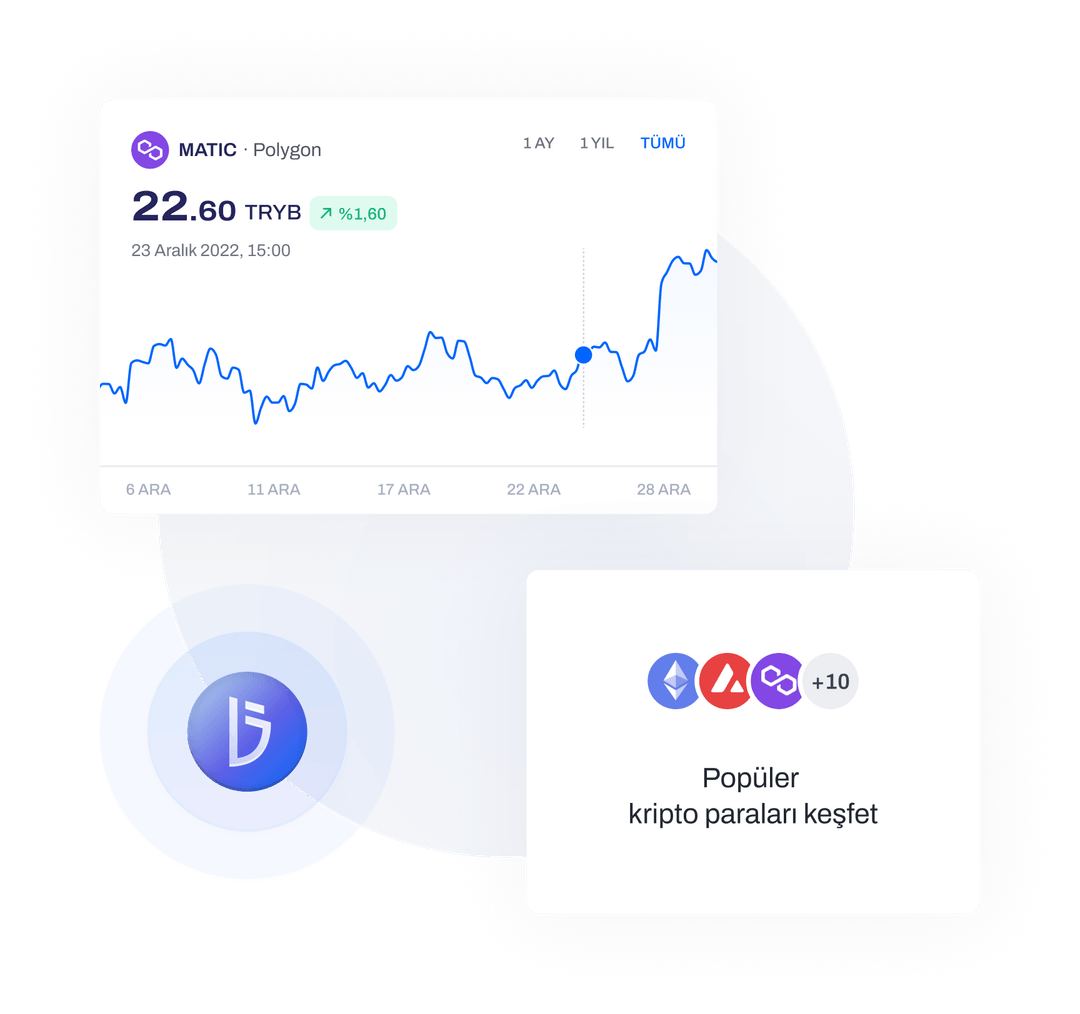
BiLira (TRYB) is a digital asset designed to maintain a stable 1:1 value with the Turkish Lira (TRY). Launched in 2019, it serves as a blockchain-based representation of Turkey’s national currency, allowing users to move Turkish Lira value across global decentralized networks without the delays or costs associated with traditional cross-border banking.
As the first and most widely adopted stablecoin for the Turkish market, TRYB functions as a critical on-ramp for Turkish residents entering the digital asset ecosystem. It provides a way to interact with global financial protocols while maintaining exposure to the local currency unit.
What is BiLira TRYB structurally?
Structurally, TRYB is a fiat-backed stablecoin. This means that for every TRYB token in circulation on a blockchain, an equivalent amount of Turkish Lira is held in reserve by the issuer, BiLira Kripto Varlık Alım Satım Platformu A.Ş.
Reserve Management and Transparency
The integrity of the TRYB peg relies on the quality and accessibility of these reserves. BiLira holds the underlying Turkish Lira in segregated accounts at regulated Turkish financial institutions. To maintain public trust, the company releases regular transparency reports prepared by independent third-party auditors. These reports verify that the amount of TRY held in bank accounts matches the total supply of TRYB tokens minted across all supported blockchains.
Multi-Blockchain Infrastructure
Unlike traditional bank deposits which are confined to a single institution’s ledger, TRYB operates across multiple blockchain networks. This multi-chain approach ensures that the asset remains liquid and accessible regardless of which specific technology a user prefers. As of early 2026, TRYB is natively supported on several major networks:
- Ethereum: The primary network for institutional DeFi and smart contract integration.
- Avalanche: Used for high-speed transactions and low-cost transfers.
- Solana: Optimized for retail payments and high-throughput applications.
- Polygon: A popular scaling solution for Ethereum with lower gas fees.
- BNB Chain: Widely used for retail-focused decentralized exchanges.
By existing as a native token on these platforms, TRYB can be integrated into automated market makers (AMMs), lending protocols, and payment gateways globally.
How it works in practice
The lifecycle of a TRYB token involves three main stages: minting, utility, and redemption. Each stage is designed to ensure that the 1:1 peg remains stable through a mechanism of direct convertibility.
The Minting Process (On-Ramping)
To create new TRYB tokens, a user must first register an account with BiLira and complete a Know Your Customer (KYC) verification process. This step is a regulatory requirement to prevent money laundering and ensure compliance with Turkish financial laws.
Once verified, the user deposits Turkish Lira into one of BiLira’s designated bank accounts. Upon receiving the funds, the BiLira platform mints an equivalent amount of TRYB tokens and sends them to the user’s specified digital wallet address. This process effectively “on-chains” the Turkish Lira value.
On-Chain Utility
Once a user holds TRYB in their wallet, they can use it for various financial activities:
- Payments and Remittances: TRYB can be sent instantly to anyone with a compatible wallet, regardless of banking hours or geographic borders.
- DeFi Participation: Users can provide liquidity to TRYB trading pairs on decentralized exchanges or use the token as collateral in lending protocols.
- Currency Hedging: While TRYB is pegged to the Lira, it allows users to hold their value in a digital format that can be quickly swapped for other stablecoins (like USDC or USDT) during periods of high local currency volatility.
The Redemption Process (Off-Ramping)
Redeeming TRYB is the reverse of the minting process. A user sends their TRYB tokens back to the BiLira platform. The platform then burns (destroys) the tokens to remove them from circulation and transfers the equivalent amount of Turkish Lira from its reserves back to the user’s registered bank account.
Fees and pricing mechanics
BiLira’s business model relies on a combination of transaction fees and the interest earned on its reserves. For the end-user, the cost of using TRYB is split into platform fees and network fees.
Platform Fees
BiLira typically offers competitive rates for minting and redeeming TRYB. While small transactions may incur a flat fee, larger volume transfers often benefit from percentage-based pricing. It is important to note that bank transfer fees for the initial TRY deposit or the final TRY withdrawal are determined by the user’s commercial bank, not by BiLira itself.
Network (Gas) Fees
Whenever TRYB is moved between wallets or used in a DeFi protocol, the user must pay a network fee (often called “gas”). This fee is paid in the native currency of the blockchain (e.g., ETH on Ethereum, SOL on Solana) and goes to the network’s validators, not to BiLira. On networks like Solana or Polygon, these fees are typically less than a few cents, whereas on Ethereum, they can fluctuate significantly based on network congestion.
Market Spread
When trading TRYB on secondary markets like decentralized exchanges, users may encounter a “spread”—the difference between the buying and selling price. Because TRYB is frequently paired with other liquid assets, the spread is usually narrow, but it can widen during periods of low liquidity or extreme market volatility.
Limits, eligibility, and availability
BiLira TRYB is primarily designed for the Turkish market, but its blockchain-based nature gives it a unique geographic profile.
Eligibility Requirements
The primary requirement for minting or redeeming TRYB directly through the BiLira platform is a Turkish bank account and a valid form of identification. Users must be at least 18 years old and pass the platform’s internal risk assessment.
Geographic Availability
While direct minting and redemption are restricted to users with access to the Turkish banking system, the TRYB token itself is globally accessible. Anyone with an internet connection and a digital wallet can receive, hold, or trade TRYB on secondary markets. This makes it a popular tool for the Turkish diaspora and international businesses that have frequent transactions with Turkish counterparts.
Transaction Limits
BiLira imposes tiered transaction limits based on the user’s verification level. Basic accounts may have lower daily or monthly caps on minting and redemptions, while fully verified institutional accounts can handle significantly larger volumes. These limits are subject to change based on evolving regulatory requirements in Turkey.
Tradeoffs, risks, and limitations
While TRYB offers significant advantages for Turkish Lira users, it carries the same risks inherent to any centralized stablecoin system.
Counterparty Risk
The most significant risk is the reliance on BiLira as the central issuer. Users must trust that the company is actually holding the reserves it claims and that it will remain solvent and capable of processing redemptions. If the issuer’s bank accounts were frozen or if the company faced legal challenges, the ability to convert TRYB back into physical Lira could be compromised.
Regulatory Risk
The regulatory environment for digital assets in Turkey is still evolving. Changes in government policy regarding stablecoins or crypto-to-fiat gateways could impact BiLira’s ability to operate. While BiLira strives for compliance, sudden shifts in the legal landscape represent a constant variable for long-term holders.
Technical and Blockchain Risk
Because TRYB exists on third-party blockchains, it is subject to the security of those networks. A smart contract vulnerability or a major network outage could prevent users from moving their funds. Furthermore, users are responsible for the security of their own private keys; if a wallet is compromised, the TRYB tokens within it cannot be recovered by BiLira.
Liquidity Constraints
While TRYB is the most liquid Turkish Lira stablecoin, its total market capitalization and trading volume are smaller than USD-pegged giants like USDC or USDT. This means that very large trades may experience higher slippage, and the token may not be supported by as many international exchanges or protocols as its USD counterparts.
In summary, BiLira TRYB provides a transparent and efficient mechanism for digitizing Turkish Lira value, but users must weigh these benefits against the centralization and regulatory risks associated with a fiat-backed digital asset.