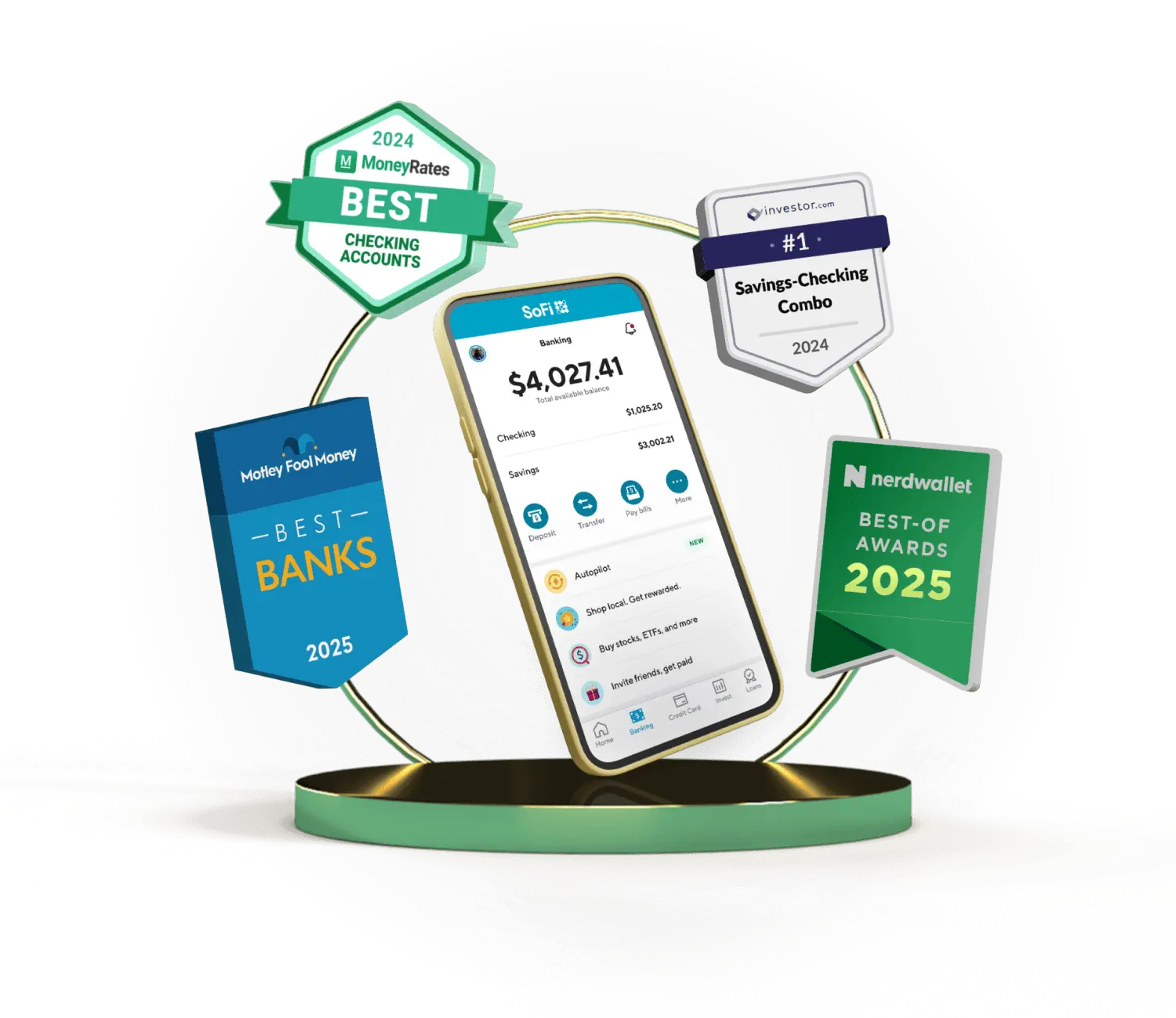
SoFi Bank is a federally chartered digital-only financial institution in the United States. It provides a consolidated checking and savings platform within a single mobile application. The bank administers deposits directly rather than relying on third-party chartered banking intermediaries.
SoFi Bank operates as a subsidiary of SoFi Technologies, Inc., which is publicly traded on the NASDAQ exchange. The platform serves retail banking clients seeking high-yield deposits and integrated credit products. It generates revenue through interest spreads on loans and licensing its Galileo processing technologies to other fintechs.
How is SoFi Bank structured as a chartered institution?
SoFi Bank operates structurally as a federally regulated commercial banking institution with a national charter. The bank is a subsidiary of SoFi Technologies, Inc., and is regulated by the Office of the Comptroller of the Currency. This chartered structure distinguishes it from neobanks that function as software layers over partner bank ledgers. It manages its own balance sheet, lending policies, and interest rate structures under federal banking guidelines.
The institution owns Technisys and Galileo, which provide the core cloud banking and payment processing infrastructure. Owning this technology enables the bank to manage account ledgers and process ACH transfers in real time. It generates revenue by collecting interest on consumer loans, mortgage originations, and Galileo platform licensing fees. This diversified revenue model reduces its reliance on transaction-based debit card interchange fees.
Deposits are insured up to standard limits by the Federal Deposit Insurance Corporation, providing safety for balances. For high-balance accounts, the bank operates a sweep program to extend coverage up to $2 million. This structural integration allows the bank to function as a complete depository and lending hub. Consequently, it can offer higher yield rates on deposits than traditional brick-and-mortar competitors.
How do SoFi savings vaults and automatic transfers function?
SoFi savings vaults function in daily use by partitioning checking and savings balances under a unified ledger. When an account is opened, the customer receives checking and savings ledgers that are linked administratively. This enables immediate, free transfers between checking balances and interest-bearing savings segments. The savings segment can be divided into up to 20 sub-accounts called Vaults.
Vaults isolate funds designated for specific long-term goals without requiring separate bank accounts. Money placed in Vaults earns the same variable interest rate as the primary savings balance. However, Vault balances are protected from daily debit card transactions and automated checking withdrawals. If a checking transaction exceeds the checking balance, the system will not auto-draft from active Vaults.
The platform includes a budgeting tool called Autopilot to manage automated recurring savings transfers. Autopilot allows users to configure rule-based transfers, such as rounding up debit card purchases to the nearest dollar. The rounded difference is automatically moved from checking to a designated savings Vault. Users can also schedule percentage-based deductions from incoming direct deposits to fund emergency savings Vaults.
What fees and interest rate tiers does SoFi Bank apply?
SoFi Bank operates a low-fee model for its depository accounts, omitting monthly maintenance and overdraft fees. The platform does not charge minimum balance fees or fee-free buffer penalties for checking overdrafts. The bank provides fee-free cash access at over 55,000 ATMs globally through the Allpoint network.
Interest rates are structured in tiers determined by deposit behavior and membership classifications. Variable Annual Percentage Yields are adjusted in response to changes in the Federal Funds Rate. Standard members who maintain an active monthly direct deposit qualify for the higher interest rate tiers. Manual deposits of at least $5,000 every 31 days also qualify accounts for these competitive rates.
| Membership Classification | Savings Balance Tier | Interest Rate (APY) |
|---|---|---|
| SoFi Plus Member ($10/month fee) | First $20,000 in balance | 4.50% |
| SoFi Plus Member ($10/month fee) | Balances above $20,000 | 3.10% |
| Standard (with Direct Deposit) | All balances | 3.10% |
| Standard (no Direct Deposit) | All balances | 0.80% |
Standard members who do not meet direct deposit or manual deposit requirements earn a base rate of 0.80% APY. SoFi Plus members pay a subscription fee of $10 per month to unlock 4.50% APY on their first $20,000. Checking balances across all membership tiers earn a standard rate of 0.50% APY. Overdrafts below $50 are covered by the Overdrive protection buffer at no cost.
Who can open a SoFi account and what are the deposit limits?
Eligibility to open a SoFi Bank account is restricted to U.S. citizens or permanent residents with a physical address. Applicants must provide a valid Social Security Number and a government-issued photo ID for verification. The bank performs identity checks through standard verification networks but does not require a minimum opening deposit. Accounts are restricted to personal consumer use, as the bank does not offer commercial business checking.
The bank applies limits on daily transactions to prevent fraud and manage liquidity requirements. Standard debit card purchases are capped at $6,000 per day, and ATM withdrawals are limited to $1,000 daily. Mobile check deposits are limited to a maximum of $150,000 per day for established accounts. Cash deposits must be completed at Green Dot retail locations, which apply a limit of $500 per transaction.
The Insured Deposit Program uses brokerage sweep agreements to distribute balances above $250,000. Funds exceeding this limit are swept automatically to a network of partner financial institutions. This structural program provides total deposit insurance up to $2 million for individual accounts. Joint accounts receive up to $4 million in FDIC coverage through this network.
What risks and ecosystem tradeoffs does SoFi Bank present?
SoFi Bank presents specific tradeoffs, including the lack of physical branch services and interest rate volatility. Because the bank operates without physical branches, customers cannot access in-person notary or cashier’s check services. All customer support, account dispute resolutions, and verification issues are handled through digital channels. This digital-only model can lead to delays in resolving frozen accounts during fraud investigations.
The tiered interest rate structure applies financial pressure to consolidate deposits and income streams. Freelancers or users with irregular income who cannot maintain direct deposits earn the lower 0.80% APY. Additionally, the competitive interest rates are variable and subject to immediate reduction without notice. If national interest rates decline, the bank will adjust its yields downward to manage its interest margins.
Consolidating checking, savings, and investments in a single app concentrates technical and security risks. An app service disruption or credential compromise can block access to all personal financial assets simultaneously. Furthermore, the rewards ecosystem pays points that only hold value when redeemed inside SoFi products. This structure incentivizes customers to remain within the brand ecosystem rather than diversifying their assets.
Common questions
Is SoFi Bank a licensed bank?
SoFi is a fully chartered national bank regulated by the Office of the Comptroller of the Currency. Unlike neobank competitors that partner with third-party banks, SoFi holds its deposits directly. This allows the bank to set its own interest policies and deposit programs.
How does SoFi offer $2 million in FDIC insurance?
The bank sweeps balances exceeding $250,000 to a network of partner banking institutions. This distributes the funds across multiple FDIC-insured entities while managing the account through a single login. The brokerage sweep agreement provides up to $2 million in total individual coverage.
Do I need a direct deposit to get the highest APY at SoFi?
The highest savings yields require a recurring direct deposit of any amount or manual deposits of $5,000 monthly. Without these qualifying deposits, the savings account yield reverts to the standard base rate of 0.80% APY. Additionally, the top 4.50% APY requires a paid SoFi Plus membership subscription.