
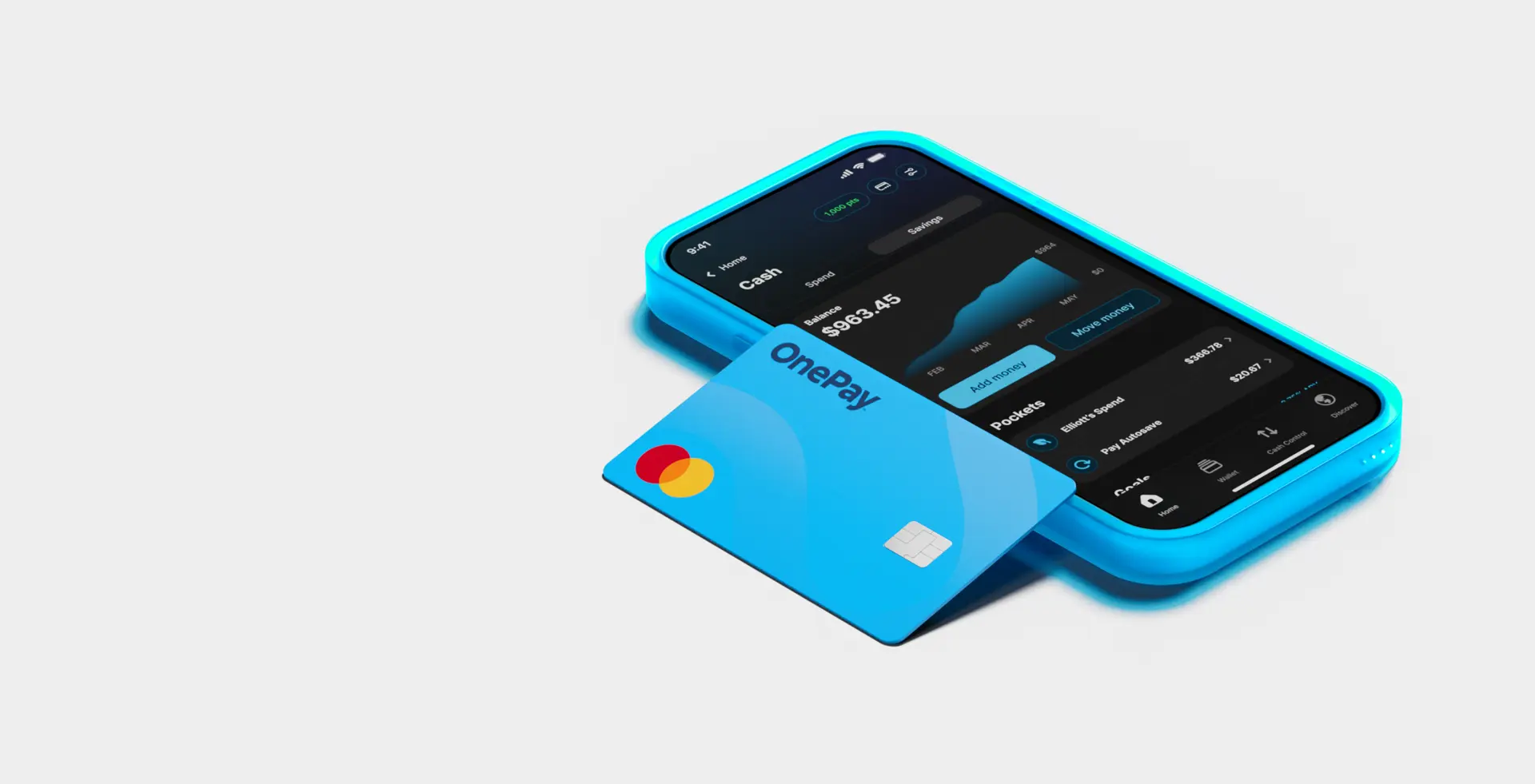
OnePay is a consumer financial technology platform focused on checking accounts and automated spending controls. The platform designs its services around data minimization and user privacy. It integrates checking balances with sub-account management tools to restrict data exposure to third-party institutions.
OnePay functions as a technology facilitator that administers accounts on behalf of partner banks. The platform operates in the United States and serves customers seeking checking accounts with enhanced privacy controls. It earns revenue by charging merchants a percentage fee on debit transactions and collecting optional monthly subscription fees.
How is OnePay structured as a financial technology platform?
OnePay operates structurally as a technology platform partnering with a chartered community banking institution. The company is not a chartered bank and does not directly custody customer deposits. Instead, banking infrastructure and deposit protection are provided by partner bank Lincoln Savings Bank. This partner bank is a member of the Federal Deposit Insurance Corporation, ensuring deposit insurance coverage up to $250,000.
The platform relies on a transaction-based monetization model rather than selling customer data. OnePay collects interchange fees paid by merchants when customers use the issued Visa debit card. Additionally, it offers paid premium subscriptions that charge a flat fee of $5 to $15 per month. These premium subscription tiers provide physical upgrades like custom metal debit cards and enhanced support queues.
Deposit management is structured around a central demand deposit account linked to digital sub-ledgers. Unlike traditional bank checking accounts, these sub-ledgers isolate transactions into distinct risk domains. By separating balances, the ledger structure prevents unauthorized access to the customer’s total funds. This design reduces fraud exposure by restricting active card authorization to designated sub-balances.
How do OnePay accounts and vaults function in daily use?
OnePay accounts function in daily use through a mobile application and linked Visa debit card. The core checking balance is managed via distinct savings and budgeting sections called Vaults. A customer can create multiple Vaults within the main account to allocate money for specific household expenses. Each Vault represents an isolated sub-ledger with its own configuration settings.
Users configure spending controls directly through the mobile interface to lock or unlock individual Vaults. The platform allows customers to set daily or monthly spending limits for each Vault. When a purchase is initiated, the transaction is authorization-checked against the specific Vault linked to the card. If the Vault has insufficient funds or is locked, the card transaction is immediately declined.
The platform manages privacy by collecting only the personal data required for identity verification. Under federal law, this includes the applicant’s name, physical address, and Social Security Number. The application does not use behavioral tracking trackers, device fingerprinting, or shopping habit analytics. This operational policy ensures that customer transaction history is not aggregated for advertising networks.
What are the fees and pricing mechanics of OnePay?
OnePay utilizes a fee-free structure for its standard checking account and ATM transactions. The core account has no monthly maintenance fees, minimum balance requirements, or activation costs. Additionally, the platform does not charge overdraft fees, choosing to decline transactions that exceed the balance. This design prevents customers from incurring unexpected debt.
| Service Fee Category | Standard Tier | Premium Tier |
|---|---|---|
| Monthly Maintenance Fee | $0 | $5 to $15 |
| Minimum Balance Fee | $0 | $0 |
| Overdraft Penalty Fee | $0 (Declined) | $0 (Declined) |
| In-Network ATM Fee | $0 | $0 |
| Out-of-Network ATM Fee | $2.50 | $0 |
In-network ATM access is free at over 55,000 ATMs across the Allpoint network. Out-of-network ATM transactions incur a fee of $2.50 charged by the platform. The premium tiers cost between $5 and $15 per month and waive out-of-network ATM fees. These tiers also provide access to expedited customer support and advanced budgeting settings.
Who is eligible for OnePay and what are the account limits?
Eligibility to open a OnePay account is restricted to U.S. citizens and permanent residents who are at least 18 years old. Applicants must provide a valid Social Security Number and a U.S. residential address during registration. The verification process complies with federal Customer Identification Program guidelines to prevent financial fraud. The platform does not require a minimum initial deposit to activate the checking account.
The checking account applies daily transaction limits to manage fraud risks. Standard accounts have a daily ATM withdrawal limit of $500 and a daily debit card spending limit of $2,500. Cash deposits are limited to a maximum of $500 per single transaction and $1,000 per day. These cash transactions must be completed at participating retail locations using Green Dot networks.
The platform does not support outgoing international wire transfers or currency conversion services. Furthermore, OnePay accounts and Vault balances do not earn interest yield. This zero-interest policy makes the account less suitable for long-term savings growth compared to high-yield savings accounts. The system is designed for active transaction management rather than capital accumulation.
What are the privacy tradeoffs and service limits of OnePay?
OnePay carries functional tradeoffs resulting from its emphasis on data minimization. The platform does not provide automated spending insights or personalized budgeting suggestions. This is because the underwriting and analytics systems do not profile customer transaction histories. Users who want automated advice must manually export their data to external spreadsheet applications.
To protect user privacy, the platform restricts integration with external financial aggregators. The system blocks standard Plaid API connections, preventing third-party apps from scraping transaction data. This limitation makes it difficult to link the account to external brokerage, budgeting, or lending platforms. Customers must use manual ACH transfers to move funds between OnePay and other financial institutions.
As a digital technology platform, the service lacks physical branch locations. All customer service issues, dispute resolutions, and identity verifications are handled through digital support. This can lead to delays in resolving account freezes during security reviews. Furthermore, the platform’s reliance on partner bank Lincoln Savings Bank introduces counterparty stability risks.
Common questions
Is OnePay a licensed bank?
OnePay is a financial technology company, not a chartered bank. All banking services and deposit custody are provided by its partner institution, Lincoln Savings Bank. This structure ensures deposits are FDIC-insured through the partner bank.
Does OnePay support Plaid integrations?
OnePay blocks standard Plaid connections to protect user data from third-party aggregators. This means you cannot link the account to apps like Venmo or Robinhood using Plaid APIs. You must link accounts manually using routing and account numbers for ACH transfers.
What is a OnePay Vault?
A Vault is a digital sub-ledger within the main checking account used to segregate funds. Each Vault can be locked, unlocked, or restricted with custom spending limits. This allows you to separate spending for specific expenses and isolate balances from card fraud.