

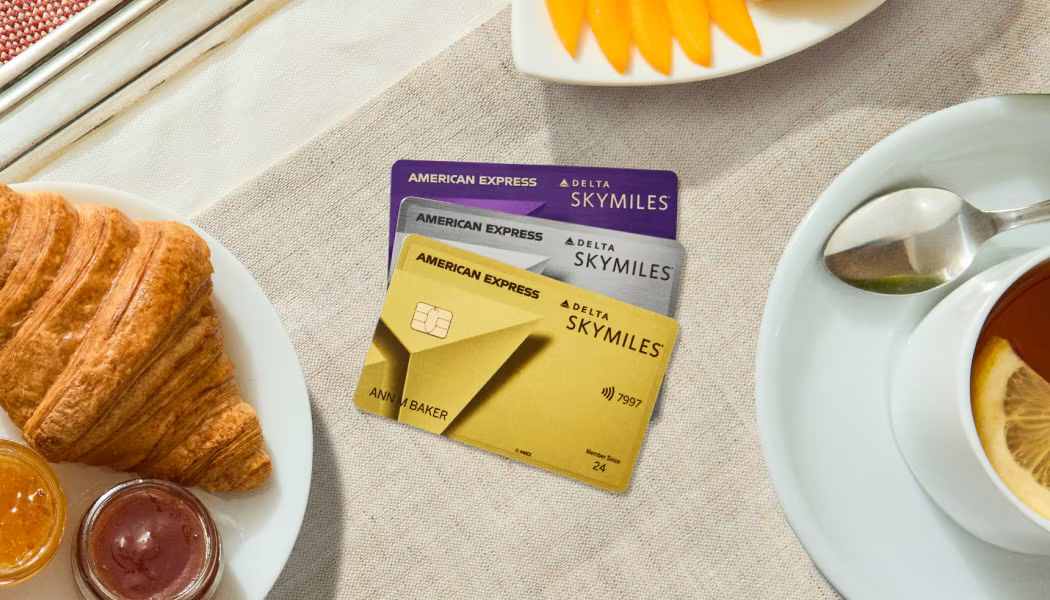
American Express issues four primary consumer credit cards in partnership with Delta Air Lines: the Blue, Gold, Platinum, and Reserve.
These cards are mechanically integrated into the SkyMiles loyalty program, designed to assist travelers in accumulating miles and achieving Medallion elite status. The following comparison outlines the structural differences in annual fees, earning power, and travel-day benefits across the Delta card lineup.
Card Overview
| Card | Annual Fee | Core Strategic Feature | TakeOff 15 |
|---|---|---|---|
| Blue | $0 | No-fee mile accrual | No |
| Gold | $150 ($0 1st yr) | Entry-level travel perks | Yes |
| Platinum | $350 | Status accumulation/Companion Certificate | Yes |
| Reserve | $650 | Lounge access/Highest status priority | Yes |
Fee and Cost Structures
The annual carrying cost of Delta-branded cards increases significantly between the mid-tier and ultra-premium levels.
Annual Fee Progression
- Delta SkyMiles Blue: $0. Designed for consumers who want to earn miles without an annual cost.
- Delta SkyMiles Gold: $0 introductory annual fee for the first year, then $150.
- Delta SkyMiles Platinum: $350. Positioned for travelers who value the annual Companion Certificate and status-boosting mechanisms.
- Delta SkyMiles Reserve: $650. The premium tier, structured around extensive lounge access and Medallion status support.
Interest and APR Mechanics
Delta American Express cards carry variable interest rates. Because the value of a Delta SkyMile is typically worth significantly less than the interest cost on a carried balance, the system’s rewards are mathematically neutralized if the balance is not paid in full each month.
Earning Rate Comparison
The cards use different multipliers to capture spending in travel and everyday categories.
| Category | Blue | Gold | Platinum | Reserve |
|---|---|---|---|---|
| Delta Purchases | 2x | 2x | 3x | 3x |
| Restaurants | 2x | 2x | 2x | - |
| U.S. Supermarkets | - | 2x | 2x | - |
| Hotels (Direct) | - | - | 3x | - |
| All Other | 1x | 1x | 1x | 1x |
Earning Strategy Differences
- Blue and Gold focus on basic 2x multipliers for Delta and dining.
- Platinum introduces 3x on hotels and Delta purchases, and maintains 2x on supermarkets and dining.
- Reserve streamlines earning to 3x on Delta and 1x on everything else, prioritizing status benefits over broad-category earning.
TakeOff 15 Mechanism
The “TakeOff 15” feature is a structural 15% discount on the mileage cost of award flights booked through Delta.
- Available on: Gold, Platinum, and Reserve cards.
- Not available on: Blue card.
This mechanism increases the purchasing power of all SkyMiles in a cardholder’s account, provided they book Delta-operated flights while the card account is active.
Baggage and Airport Benefits
Baggage fee waivers are a primary mechanism for offsetting the annual fees of the mid-tier cards.
Checked Bag Waivers
- Gold, Platinum, and Reserve: First checked bag free for the cardholder and up to eight companions on the same reservation.
- Blue: No baggage benefits.
Priority Boarding
- Gold, Platinum, and Reserve: Main Cabin 1 Priority Boarding. This allows entry into the aircraft ahead of general boarding, primarily to secure overhead luggage space.
Lounge Access Comparison
Lounge entry is the defining feature of the highest-tier Delta cards.
| Card | Delta Sky Club Access | Amex Centurion Lounge Access |
|---|---|---|
| Blue / Gold | None | None |
| Platinum | None | None |
| Reserve | Full access (limited visits) | Full access when flying Delta |
Structural Changes to Access
As of 2025, the Reserve card includes 15 annual Sky Club visits, with unlimited access available only after meeting high annual spending thresholds ($75,000+). The Platinum card no longer offers a per-visit fee option for lounge entry.
Status Qualification and Perks
For travelers pursuing Medallion status, the Platinum and Reserve cards provide “MQD Headstart” and “MQD Boost” mechanisms.
Medallion Qualification Dollars (MQD)
- Platinum and Reserve: $2,500 MQD “Headstart” annually.
- Platinum: Earn $1 MQD for every $20 spent.
- Reserve: Earn $1 MQD for every $10 spent.
The Reserve card provides a 2x faster path to status through spending compared to the Platinum card.
Companion Certificates
- Platinum: Annual Roundtrip Main Cabin Companion Certificate (after renewal).
- Reserve: Annual Roundtrip First Class, Delta Comfort+, or Main Cabin Companion Certificate (after renewal).
Selection Framework
Choose Delta SkyMiles Blue if:
- You want to earn miles without an annual fee.
- You do not check bags and fly Delta infrequently.
- You want the “no foreign transaction fee” benefit on a no-annual-fee card.
Choose Delta SkyMiles Gold if:
- You check bags on at least two round-trips per year ($140+ value).
- You want the 15% “TakeOff 15” discount on award redemptions.
- You spend significantly at U.S. supermarkets and restaurants.
Choose Delta SkyMiles Platinum if:
- You are pursuing Medallion status and need the $2,500 MQD headstart.
- You can utilize the annual Companion Certificate to offset the $350 fee.
- You want higher 3x earning on hotels and Delta flights.
Choose Delta SkyMiles Reserve if:
- You require Delta Sky Club and Centurion Lounge access.
- You want the fastest spending path to Medallion status ($1 MQD per $10).
- You want the highest possible upgrade priority for non-Medallion members.
Common Misconceptions
“The Blue card gets me a free checked bag.” No. The Blue card is the only card in the Delta lineup that does not include a baggage fee waiver.
“TakeOff 15 works on partner flights like Virgin Atlantic.” No. The 15% mileage discount only applies to flights operated by Delta or Delta Connection.
“The Platinum card gains me entry to the Sky Club.” No. The Delta SkyMiles Platinum card no longer provides any form of Sky Club access, even for a fee. Only the Reserve card (and the non-branded Amex Platinum) provides lounge access.
“Companion certificates can be used as soon as I get the card.” No. Companion certificates are issued upon the first renewal of the card (after the second year’s annual fee is paid).