Conkarta is a financial technology platform that facilitates the issuance of U.S. dollar charge cards to high-net-worth individuals who do not reside in the United States. The system is designed specifically for globally mobile professionals and investors who maintain significant assets in U.S. financial institutions but lack a U.S. Social Security Number (SSN).
This review documents the structural mechanics, asset-backed approval process, and operational trade-offs of the Conkarta card system.
What Conkarta is structurally
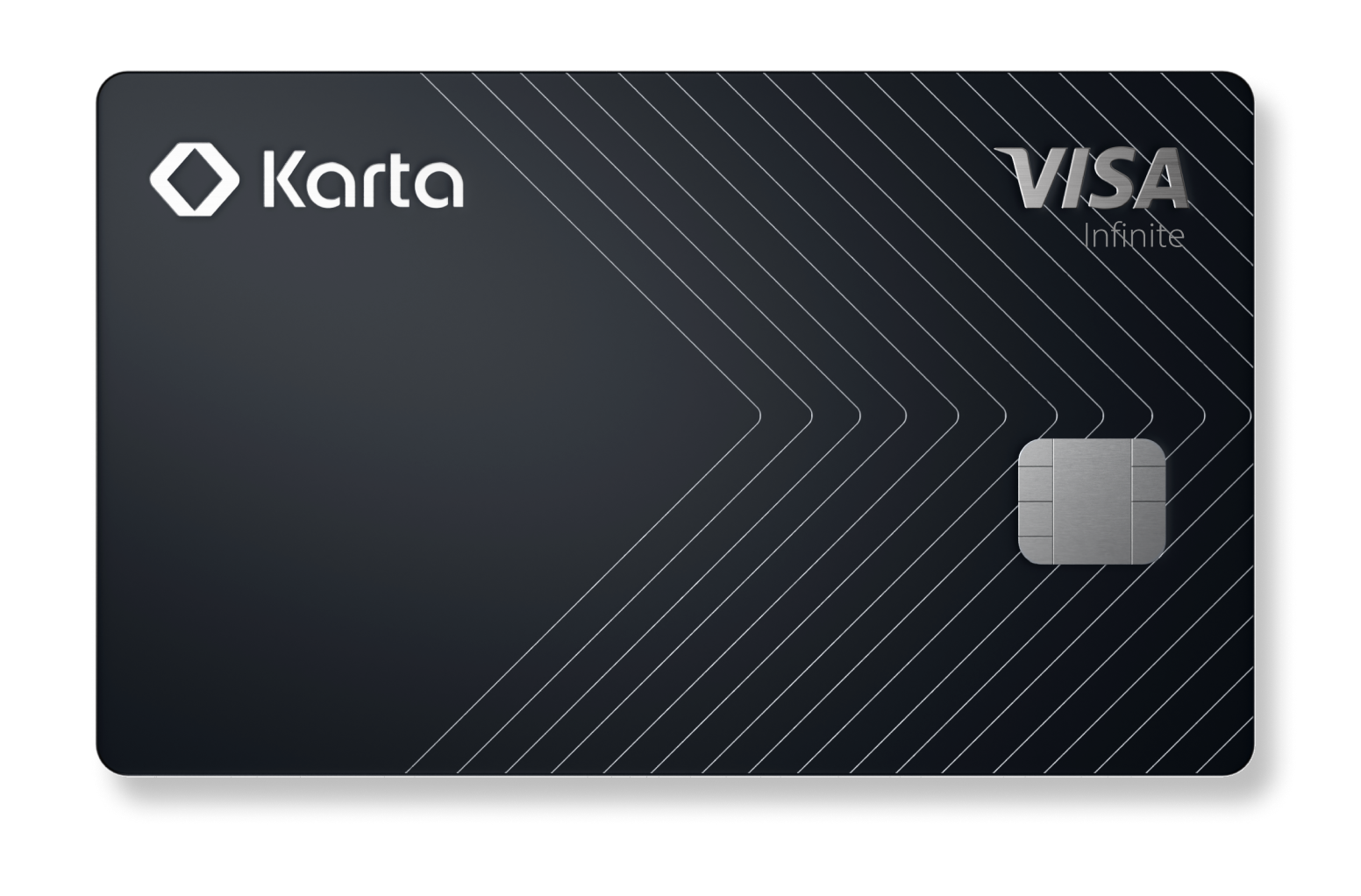
Conkarta (often marketed as Karta) is a premium charge card program issued in the United States on the Visa Infinite network. Unlike traditional credit cards that rely on personal credit scores and history with U.S. credit bureaus, Conkarta utilizes an “Assets Under Management” (AUM) model for underwriting and approval.
Structurally, the product is a charge card rather than a revolving credit card. This means that the system is designed for the balance to be paid in full at the end of each billing cycle. The card is typically issued through partnerships with U.S. banks, with Conkarta providing the technology layer for asset verification, customer support, and digital management.
The platform targets individuals who have established brokerage accounts or bank balances with U.S. institutions such as Interactive Brokers or Charles Schwab. By linking these accounts, the system can verify the user’s liquidity and net worth in real-time, allowing for a U.S.-issued card without the need for local residency or a domestic credit history.
How the system works in practice
The application process for a Conkarta card is centered on digital asset verification rather than traditional paperwork. Prospective users must link their U.S. financial accounts via a secure API, allowing Conkarta to view current balances and historical asset data.
Once an account is approved, the user receives immediate access to a virtual card, which can be added to mobile wallets like Apple Pay or Google Pay. A physical metal card is subsequently issued and shipped to the user’s international address. The management of the card—including spending tracking, limit adjustments, and customer service—is primarily handled through a digital interface and a dedicated WhatsApp concierge.
The concierge service is a core feature of the practice, providing 24/7 support for travel bookings, restaurant reservations, and administrative tasks. This service mirrors the high-touch support models found in traditional private banking and ultra-premium credit products.
Fees and pricing mechanics
The Conkarta system involves several distinct cost components, which vary depending on whether the card is used for personal or business purposes.
- Annual Fee: The primary cost for individual users is typically a $300 USD annual fee. This fee covers the cost of card issuance, the concierge service, and access to premium Visa Infinite benefits.
- Foreign Exchange (FX) Margins: While the card is marketed as having “no foreign transaction fees,” users should be aware of the underlying FX mechanics. For transactions in currencies other than USD, the system uses the Visa network exchange rate. For business-specific accounts, an additional platform-specific margin (often around 1%) may be applied.
- Asset Maintenance: There is an indirect cost associated with the requirement to maintain significant liquidity in U.S. accounts. Users must keep their linked AUM above a certain threshold to keep the card active and maintain their spending limits.
The pricing structure is designed to appeal to users who already maintain large USD balances and would otherwise face high FX fees or limited acceptance with their local domestic cards when traveling internationally.
Limits, eligibility, and availability
The spending limits on a Conkarta card are dynamic and directly tied to the value of the linked assets. The system typically calculates a “charge limit” that is a percentage of the user’s total AUM. For example, a user with $100,000 in a linked brokerage account might receive a monthly spending limit of $10,000 to $20,000.
Eligibility Requirements:
- Non-Resident Status: The product is specifically designed for non-U.S. residents.
- Minimum AUM: Approval generally requires a minimum balance in a supported U.S. brokerage or bank account, often starting at $50,000 USD, though this can vary by partner program.
- Identity Verification: Users must provide a valid international passport and undergo standard Anti-Money Laundering (AML) checks.
The card is available to residents of most countries, provided they can verify their assets in U.S. dollars. However, availability may be restricted for residents of countries subject to U.S. Treasury (OFAC) sanctions or those considered high-risk for financial crimes.
Trade-offs, risks, and limitations
The primary trade-off of the Conkarta system is the exchange of data privacy and asset commitment for the convenience of a premium U.S. payment instrument.
Pros and Efficiency:
- No SSN Required: The most significant benefit is the ability to access a U.S. Visa Infinite card without a U.S. Social Security Number or established credit history.
- Global Utility: As a U.S.-issued Visa, the card has nearly universal acceptance and often bypasses the payment blocks that sometimes affect cards from emerging markets.
- High Limits: Because limits are based on assets rather than credit scores, high-net-worth individuals can access spending power that matches their actual wealth.
Risks and Constraints:
- Data Privacy: Users must grant Conkarta API access to their brokerage or bank accounts. This introduces a security surface where sensitive financial data is shared with a third-party technology platform.
- No Revolving Debt: As a charge card, the system does not allow users to carry a balance over several months. Failure to pay in full can result in immediate card suspension and potential liquidation of linked assets in extreme cases.
- Limited Credit Building: While some users hope to use the card to build a U.S. credit score, Conkarta does not always report to the major U.S. credit bureaus (Experian, TransUnion, Equifax), meaning it may not help establish a traditional FICO score.
Users should also consider the “lock-in” effect; the utility of the card is contingent on maintaining wealth in U.S. institutions, which may not always align with the user’s broader investment or tax strategies.
See also: Amex Platinum Card Review, Private Banking Differences, How Credit Scores Work