
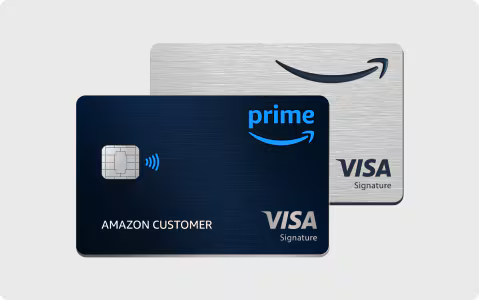
The Amazon Prime Visa is a co-branded credit card issued by Chase and designed specifically for users of the Amazon ecosystem. It is available only to Amazon Prime members and offers elevated cashback rates on Amazon and Whole Foods purchases.
The card addresses a common scenario: consumers who concentrate significant spending within Amazon’s retail ecosystem. For these users, the 5% cashback rate on Amazon purchases represents a higher return than most general-purpose cards.
What the Amazon Prime Visa Is (Overview)
The Amazon Prime Visa is a Visa Signature credit card. It is tied directly to an Amazon Prime membership.
The system combines three elements:
- A credit instrument: A revolving credit line underwritten by Chase.
- A loyalty integration: Rewards are deposited directly into the Amazon account and can be used at checkout.
- A membership gate: The 5% rate requires an active Prime membership. Without Prime, the rate drops to 3%.
There is no annual fee for the card itself, but the Prime membership has its own separate cost.
How the Rewards Structure Works
The Amazon Prime Visa uses a tiered cashback structure. Rates vary by merchant category and Prime membership status.
5% Cashback Tier (Prime Members)
Members with an active Prime subscription earn 5% back on purchases at:
- Amazon.com: All eligible purchases, including digital content.
- Amazon Fresh: Grocery delivery orders.
- Whole Foods Market: In-store and online purchases.
This tier is the core value proposition for the card and applies without spending caps.
3% Cashback Tier (Non-Prime or Non-Amazon)
Two scenarios trigger the 3% rate:
- Non-Prime cardholders: If the Prime membership lapses, Amazon and Whole Foods purchases earn 3% instead of 5%.
- Chase Travel and select categories: Cardholders earn 2% at restaurants, gas stations, and on local transit and commuting.
1% Cashback Tier
All other purchases earn 1% back.
How Rewards Are Redeemed
Cashback earned on the Amazon Prime Visa is credited to the cardholder’s Amazon account. This creates a frictionless redemption path.
Checkout Redemption
At Amazon checkout, cardholders can apply their rewards balance directly to a purchase. This option appears alongside payment methods during the final step.
Statement Credit or Cash
Rewards can also be redeemed as a statement credit to reduce the card balance or deposited into a linked bank account. These options are managed through the Chase credit card portal.
No Point Expiration
Amazon Prime Visa rewards do not expire as long as the account remains open and in good standing.
How the Card Generates Costs
The Amazon Prime Visa has no annual fee for the card itself. However, the conditional 5% rate introduces indirect costs.
The Prime Membership Requirement
The 5% rate applies only while the cardholder maintains an active Amazon Prime subscription. Prime has its own annual or monthly fee. If the card is used solely for the 5% Amazon benefit, the net value depends on whether the additional cashback earned exceeds the Prime membership cost.
For users who already subscribe to Prime for other reasons (delivery benefits, streaming), the card’s 5% rate is incremental value.
Interest and APR
Like all credit cards, the Amazon Prime Visa applies a variable APR to any balance not paid in full by the due date. Carrying a balance eliminates the cashback benefit and adds to the total cost of purchases.
Foreign Transaction Fees
The card does not charge foreign transaction fees, making it usable internationally without a fee penalty.
Practical Implications of an Amazon-Linked Card
The Amazon Prime Visa creates specific incentives and constraints.
Spending Concentration
The 5% rate encourages users to route purchases through Amazon rather than other retailers. For products available at similar prices elsewhere, this creates a financial incentive to consolidate on Amazon.
Whole Foods Integration
For Prime members who shop at Whole Foods, the card captures grocery spending at an elevated rate. This is notable because groceries are a category excluded by many flat-rate cashback cards.
Instant Fulfillment of Rewards
Because rewards appear immediately in the Amazon account, they can be used on the next purchase without waiting for a billing cycle. This differs from cards that issue rewards only after the statement closes.
Tradeoffs, Risks, and Limitations
The Amazon Prime Visa has specific system constraints.
- Prime dependency: Without Prime, the main benefit (5% at Amazon) drops to 3%. This makes the card less compelling for non-Prime users.
- Low non-Amazon earning: The 1–2% rates on non-Amazon spending are below the market average for flat-rate cards. Users who split spending across many retailers may find higher overall value elsewhere.
- Redemption friction outside Amazon: Redeeming for statement credit or cash requires navigating the Chase portal rather than the seamless Amazon checkout experience.
- No transfer partners: Unlike travel cards, the Amazon Prime Visa does not offer transfer to airline or hotel loyalty programs. Rewards are cash-back only.
Regional and Regulatory Differences (United States)
The Amazon Prime Visa is a U.S. consumer credit product. It is issued by Chase and regulated under U.S. consumer credit laws, including the Truth in Lending Act (TILA) and the Fair Credit Reporting Act (FCRA).
Amazon operates internationally, but the Prime Visa is available only in the United States. Other countries may have different Amazon co-branded cards with different issuers and terms.
Common Misconceptions About the Amazon Prime Visa
“I always get 5% back.” The 5% rate applies only at Amazon, Amazon Fresh, and Whole Foods, and only while you have an active Prime membership.
“The card is free.” The card has no annual fee, but the 5% rate requires a paid Prime membership. The combined cost should be considered.
“I can transfer points to airlines.” Amazon Prime Visa rewards are cashback only. There are no transfer partners for travel redemptions.
“Rewards expire if I don’t use them.” Rewards do not expire as long as the account remains open and in good standing.
“The card is worth it even without Prime.” At 3% on Amazon without Prime, the card is less competitive than some flat-rate 2% cards for general spending.