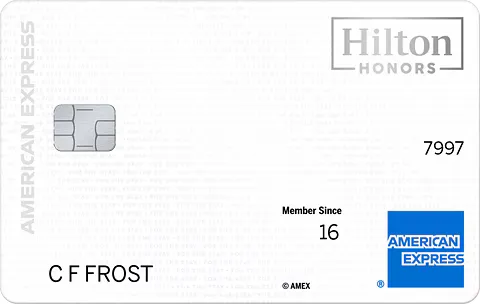


Travelers seeking to participate in hotel loyalty programs without committing to recurring membership costs typically evaluate three primary products: the Marriott Bonvoy Bold Card, the IHG One Rewards Credit Card, and the Hilton Honors American Express Card. Chase previously sold the no-fee IHG card as the Traveler card. On October 16, 2026, that URL redirected to the IHG One Rewards Credit Card.
As of October 2026, each card has a $0 annual fee and no foreign transaction fee. The cards differ in earn rates, automatic Silver status, and how award nights are priced.
Account Structure and Program Access
Each card is tied to one hotel loyalty program. Points and status from the card apply inside that program.
- Marriott Bonvoy Bold. Chase issues the card on Visa. Chase may issue it as a Visa Signature or a Visa Platinum. In July 2024, Chase and Marriott described the portfolio as more than 30 brands.
- IHG One Rewards Credit Card. Chase issues the card. The October 16, 2026 product page uses Mastercard trademarks. IHG lists 21 hotel brands and 7,000+ destinations, including Holiday Inn and InterContinental. The former Traveler name is the same review.
- Hilton Honors Amex. American Express issues the card on its own network. Hilton lists 28 brands and 9,400+ locations, including Hampton and Waldorf Astoria.
The Hilton card’s 5x categories are U.S. restaurants, U.S. supermarkets, and U.S. gas stations. The Bold and IHG offer pages list their bonus categories without a U.S. limit.
Dimension 1: Automatic Elite Status Mechanics
All three cards include automatic Silver status in their own program, as of October 2026. The published Silver benefits differ.
Hilton Silver vs. Marriott Silver vs. IHG Silver
- Hilton Silver. The Hilton Honors card includes complimentary Silver status. Silver members earn a 20% bonus on base points from stays. Hilton Honors terms give Silver and higher tiers every fifth night free on a standard-room reward stay booked entirely with points. On a stay of up to 20 nights, the 5th, 10th, 15th, and 20th nights are free. The free nights are confirmed at booking. The rule does not apply to paid stays or Points & Money stays.
- Marriott Silver. The Bold card includes Silver Elite status for each calendar year the account is open and not in default. Marriott Bonvoy Silver Elite earns 10% more points on eligible stays and priority late checkout where available. Chase deposits 5 Elite Night Credits each calendar year. If another open Marriott consumer card on the same account grants more elite night credits, only the higher amount is deposited.
- IHG Silver. The IHG One Rewards Credit Card includes Silver Elite status while the account remains open. Chase describes that status as up to 2 extra points per dollar on most stays, which is a 20% bonus on a 10-point member base. The card also deposits 5 Elite Night Credits at opening and at the start of each calendar year. The fourth-night reward rule is a card benefit, not a Silver benefit.
Hilton Silver includes a fifth-night rule on award stays. Marriott Silver on the Bold card includes 5 elite night credits toward the next tier. IHG Silver includes a 20% points bonus, and elite points do not expire while that status lasts.
Dimension 2: Point Earning Efficiency
Card earn rates count each program’s own points. The issuers do not publish a shared cash value that converts one program’s point into another’s.
Multiplier Comparison
| Category | Marriott Bold | IHG One Rewards | Hilton Amex |
|---|---|---|---|
| At program hotels | 3x points | 5x points | 7x points |
| Named bonus categories | 2x points | 3x points | 5x U.S. grocery, gas, and dining |
| Other purchases | 1x points | 2x points | 3x points |
As of October 2026, Chase lists these Bold categories. The card earns 3 points per dollar at participating Marriott Bonvoy hotels. It earns 2 points per dollar at grocery stores, on internet, cable, and phone services, on select streaming, on rideshare in taxicabs and limousines, and on select food-delivery services. Other purchases earn 1 point per dollar.
As of October 16, 2026, the IHG card earns 5 points per dollar at participating IHG hotels. It earns 3 points per dollar on dining, including takeout and eligible delivery, at gas stations, and at grocery stores. Other purchases earn 2 points per dollar. The current page does not list utilities or select streaming in the 3-point group. The primary cardmember earns 10,000 bonus points after $15,000 in purchases in a calendar year.
The Hilton Honors card earns 7 points per dollar at hotels and resorts in the Hilton portfolio. It earns 5 points per dollar at U.S. restaurants, U.S. supermarkets, and U.S. gas stations. Other eligible purchases earn 3 points per dollar.
A 7x Hilton rate and a 3x Marriott rate count different point currencies. Award prices are set inside each program.
Dimension 3: Redemption Efficiency Multipliers
These rules change how many nights are charged on an award stay inside one program.
The 4th Night vs. 5th Night
On the IHG One Rewards Credit Card, Chase says that starting in 2027, $5,000 in purchases in a calendar year unlocks a 4th reward night free on a consecutive four-night points stay. The unlocked benefit lasts for the rest of that year and the following calendar year. It does not apply to paid stays. Resort fees and incidental charges are still due. The October 16, 2026 page does not describe the benefit as available with no spend minimum.
Hilton’s fifth night free applies to Silver, Gold, Diamond, and Diamond Reserve members on a standard-room stay booked entirely with points. It is not a separate free-night certificate from the Hilton Honors card. A five-night stay includes one night at 0 points.
Marriott states that members receive a complimentary night when they redeem points for five consecutive nights. The offer is called Stay for 5, Pay for 4. The Bold card published benefits do not add a separate free-night award or a card-only night discount.
Dimension 4: Path to Higher Status
Published paths from these cards to the next status tier differ by program, as of October 2026.
- Marriott. The Bold card provides 5 Elite Night Credits each calendar year. If another open Marriott consumer card on the same account grants more elite night credits, only the higher amount is deposited. Marriott Bonvoy lists Gold Elite at 25 nights per year and Platinum Elite at 50 nights per year. A cardholder who receives only those 5 credits is 20 nights short of Gold and 45 nights short of Platinum.
- Hilton. A $20,000 spend on the Hilton Honors American Express Card in a calendar year can move that cardmember from Silver to Gold through the end of the next calendar year.
- IHG. A $15,000 spend in a calendar year qualifies the primary cardmember on the IHG One Rewards Credit Card for Gold Elite through December 31 of the following year. That replaces the older $20,000 Traveler threshold.
Marriott uses night credits. Hilton and IHG use calendar-year card spend for this upgrade. Hilton’s published path is $20,000. IHG’s published path on October 16, 2026 is $15,000. The IHG card also deposits 5 Elite Night Credits at opening and at the start of each calendar year.
Dimension 5: Geographic and Auxiliary Constraints
Acceptance and fees
As of October 2026, all three cards list a $0 annual fee and no foreign transaction fee.
The constraint on the Hilton Honors card 5x rate is geography. Those categories are U.S. restaurants, U.S. supermarkets, and U.S. gas stations. Purchases outside those categories earn 3 points per dollar on this card.
The Bold card is a Visa card. The IHG One Rewards Credit Card page uses Mastercard trademarks. The Hilton card is an American Express card. The three offer pages do not publish a shared acceptance rate for those networks.
How Night Rules and Status Paths Differ
Three constraints separate these cards.
- Point currencies. Hilton’s published multipliers are higher counts of Hilton points. Marriott’s multipliers are counts of Marriott points. Neither issuer publishes a conversion between the two currencies.
- Four-night stays and five-night stays. On the IHG One Rewards Credit Card, the 4th reward night starts in 2027 after $5,000 in purchases in a calendar year. Hilton and Marriott publish one complimentary night on a five-night points redemption.
- Night credits and card spend. The Bold card deposits 5 elite night credits. Gold Elite is 25 nights and Platinum Elite is 50 nights. The Hilton Honors card publishes a $20,000 calendar-year spend path to Gold. The IHG card publishes a $15,000 path, plus 5 Elite Night Credits a year.
Common Misconceptions in Comparisons
“7x Hilton points equal 3x Marriott points.” The 7x rate counts Hilton points. The Bold card posts 3 Marriott points per dollar at Marriott hotels. The issuers do not publish those multipliers as equivalent cash returns.
“Visa is a stronger network than American Express.” The Bold card is a Visa card. The IHG One Rewards Credit Card page uses Mastercard trademarks. The Hilton Honors card is an American Express card, and American Express lists Amex Offers on that card. The Hilton 5x categories are limited to U.S. restaurants, U.S. supermarkets, and U.S. gas stations.
“Status from these cards combines across programs.” Elite status stays inside each program. The Bold card and the Hilton Honors card each include Silver status in their own program. The two Silver tiers do not combine into a higher tier in either program.