
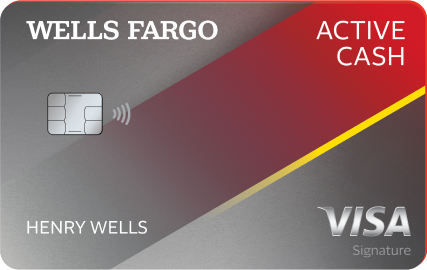
The Wells Fargo Active Cash® Card is a consumer credit product that uses a fixed percentage for earning rewards on purchases. It operates on the Visa network and is issued by Wells Fargo Bank, N.A.
Most credit card rewards programs use complex category systems to drive spending in specific areas. This card uses a different mechanism, providing a uniform rate across all eligible transaction types.
What the Wells Fargo Active Cash Card Is (Overview)
The Wells Fargo Active Cash Card is a revolving credit line paired with a rewards program. It is designed for users who prefer a single earning rate rather than managing multiple bonus categories.
The product includes standard credit features such as a credit limit, monthly billing cycles, and interest charges on carried balances. The primary differentiator is the “Active Cash” branding, which indicates the specific rewards structure.
Credit cards are regulated financial instruments. This means the card must follow federal disclosure rules regarding interest rates and fees, while the rewards program is governed by a separate set of terms and conditions.
How the 2% Cash Rewards Mechanism Works
The core function of the card is the accrual of rewards based on net spending. Net spending is defined as new purchases minus any returns or credits.
-
Transaction processing When a cardholder makes a purchase, the transaction is authorized and then settled. Only settled transactions generate rewards. Temporary authorizations or pending charges do not impact the rewards balance.
-
Reward calculation The system calculates rewards as 2% of the transaction amount. For example, a $100 purchase results in a $2 rewards credit. This calculation applies to every eligible dollar spent without a cap.
-
Exclusion logic Not all card usage counts as a purchase. Transactions like cash advances, balance transfers, lottery tickets, and wire transfers are excluded from reward accrual. Fees and interest charges also do not earn rewards.
-
Reward posting Rewards typically post to a “cash rewards” balance at the end of the billing cycle. This balance is separate from the credit limit or the account balance until the user initiates a redemption.
How Redemption and Payouts Are Structured
Earning rewards is the first step in the cycle. The second step is moving those rewards from a pending balance into a usable form of value.
Redemption destinations
The rewards can be moved to several different locations. Users can choose to apply them as a statement credit to reduce their card balance. Alternatively, the rewards can be deposited into a linked Wells Fargo checking or savings account.
Minimum thresholds
The payout system often requires a minimum amount before a transfer can occur. For example, a $25 minimum may apply for certain redemption types. This prevents the high frequency of very small transfers.
Physical redemption options
Some users prefer physical currency. The program allows for rewards to be withdrawn as cash in $20 increments at Wells Fargo ATMs using a Wells Fargo debit or ATM card. This bridge between digital rewards and physical cash is a specific system feature.
How the Card Generates Costs and Risks
While the rewards program provides value based on spending, the underlying credit engine generates costs through several mechanisms.
Interest and the grace period
The annual percentage rate (APR) determines the cost of borrowing. If a cardholder pays their full statement balance by the due date, they generally avoid interest on purchases. If a balance carries over, interest accrues daily on the average daily balance.
Penalty pricing and late fees
Missing a payment triggers a sequence of system events. A late fee is charged to the account, and the issuer may apply a penalty APR. This significantly increases the cost of the credit line and can negate the value of any earned rewards.
Balance transfer fees
The card often includes introductory offers for balance transfers. While the interest rate might be 0% for a period, the system charges a flat percentage fee for the transfer itself. This fee is added to the principal balance and does not earn rewards.
Practical Implications of a Flat-Rate System
Using a flat-rate card changes how a consumer interacts with the credit ecosystem. It removes the need for “category optimization” where a user must remember which card to use for gas or groceries.
Simplicity vs. Optimization
The tradeoff for simplicity is the potential loss of higher rewards. Some cards offer 3% or 5% on specific categories. A 2% flat-rate system provides a “floor” for rewards on all categories but lacks the “ceiling” of specialized cards.
Impact on merchant choice
Because the reward rate is the same across all merchants, the card does not incentivize one store over another. This makes the rewards accrual predictable regardless of where the spending occurs.
Integration with banking
For users who already hold accounts at Wells Fargo, the redemption process is more integrated. The system allows for internal transfers that happen faster than external transfers to other banks.
Tradeoffs, Risks, and Limitations
The Wells Fargo Active Cash Card has specific constraints that impact its utility in different scenarios.
- Foreign transaction fees: The card may charge a fee for purchases made outside the United States. This fee is often 3%, which exceeds the 2% rewards rate, creating a net cost for international use.
- Credit requirements: Approval for the card depends on credit underwriting. The system typically requires a “good” to “excellent” credit profile.
- Reward forfeiture: If an account is closed or falls into a specific delinquency status, earned rewards that have not yet been redeemed may be forfeited.
- No category bonuses: As noted, there are no “booster” categories for high-spend areas like travel or dining.
Regional and Regulatory Differences (United States)
The card is issued in the United States and is subject to U.S. federal regulations. These include the Truth in Lending Act (TILA), which dictates how costs must be disclosed to consumers.
The rewards program itself is a contractual agreement. Unlike the credit balance, the rewards are not considered property of the cardholder until they are redeemed. This distinction is important during disputes or bankruptcy proceedings.
In other jurisdictions, 2% cashback is rare due to lower interchange fee caps. Interchange fees are the costs merchants pay to banks for processing card transactions. In the U.S., these fees are high enough to support a 2% rewards rate.
Common Misconceptions About the Active Cash Card
“All spending earns 2% back.” This is inaccurate. Only “eligible purchases” earn rewards. Fees, interest, and cash-like transactions are excluded by the system logic.
“Rewards are the same as cash in the bank.” Rewards are a rebate on spending. They only become “cash” once they are successfully redeemed and moved into a deposit account or received as a check.
“The 2% rate is guaranteed forever.” Credit card terms can be changed with proper notice. While the rate is “unlimited,” the issuer reserves the right to modify the program rules or the percentage rate in the future.
“It is always a 2% gain.” If a user carries a balance and pays interest, the APR will almost always be higher than the 2% rewards rate. In this scenario, the user is paying more in interest than they are earning in rewards.