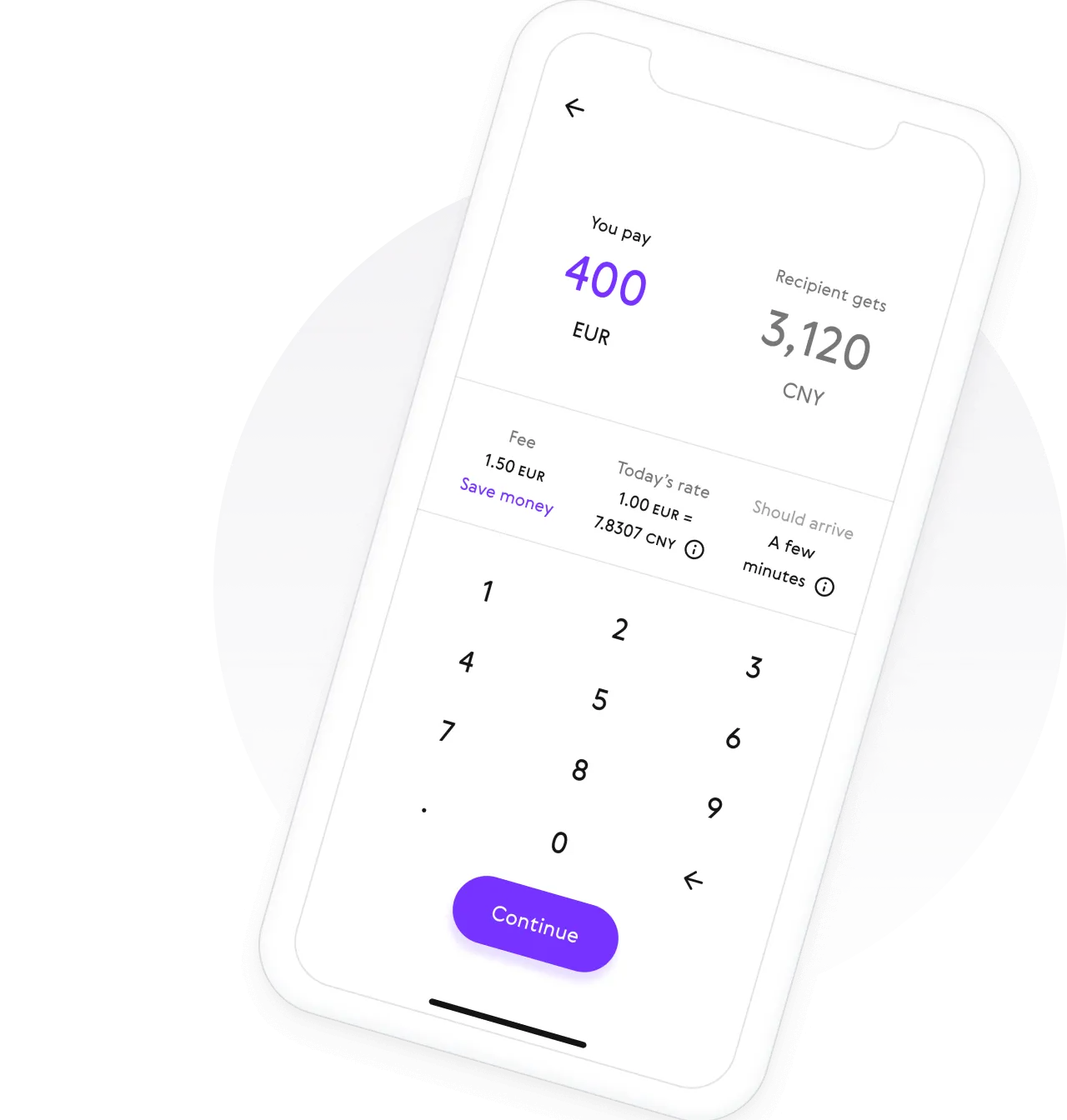


A remittance app can quote a rate and mark a transfer sent within seconds. The recipient still needs a bank credit, a mobile wallet, or cash at an agent in the payout country.
That credit moves on a domestic payment system. Often the remittance firm is not a member of that system. A local bank, a wallet operator, or a cash agent finishes the payout.
The licensing prerequisite
A remittance firm typically needs permission where it collects funds and again where it pays them out.
In the United States, FinCEN requires a money transmitter to register as a money services business. The firm files FinCEN Form 107 within 180 days of starting and renews it every two years.
The filing records the firm under the Bank Secrecy Act. State regulators issue the money-transmitter licenses.
In the European Union, Directive (EU) 2015/2366 is the payment-services text consolidated on 17 January 2025. Article 11 makes an authorisation valid in every member state. Article 28 requires notice to the home authority before the firm starts in another member state.
As of the European Parliament legislative train in June 2026, PSD3 still awaited formal adoption. Parliament and the Council had a provisional agreement on 27 November 2025.
Payout countries add their own gate. The Reserve Bank of India Money Transfer Service Scheme, updated on 29 September 2026, covers inward personal remittances.
An overseas firm, the Overseas Principal, must tie up with an Indian Agent. The Agent may not send funds back to the Overseas Principal. The Overseas Principal also needs Reserve Bank authorisation under the Payment and Settlement Systems Act, 2007, and a home-country money-transfer license.
Its net worth must be at least USD 1 million. The Reserve Bank may relax that floor for some firms from FATF member countries.
A home-country license covers collection. Joining the payout system is a separate permission.
Direct bank account holding
Some remittance firms open a bank account in the payout country and release local currency from that balance.
The CPMI access report of 12 May 2022 defines direct access as full membership. The member instructs, clears, and settles for itself, usually through an account at the central bank. Domestic banks almost always qualify. Non-bank payment firms qualify less often.
Firms without that membership hold local currency at a commercial bank. Paying from that pool is prefunding.
The CPMI monitoring brief of May 2026 reports a survey collected from May to September 2025.
Direct access for authorised non-bank payment firms reached 45 percent of fast payment systems in the survey. It reached 39 percent of real-time gross settlement systems. Both shares rose by more than 15 percentage points in 2025.
The brief says Europe rose to 56 percent, from 15 percent in 2024. Eleven percent of fast payment systems in the survey exclude non-bank payment firms. For real-time gross settlement systems that share was 38 percent.
The Bank of England has let non-bank payment firms hold real-time gross settlement accounts since 2017. Those accounts can settle Faster Payments, Bacs, CHAPS, and the Image Clearing System.
Client funds and the firm’s own funds stay in separate accounts. Safeguarding rules still require a commercial bank for client money.
A local balance funds the payout without a cross-border wire on each transfer. The balance stays in local currency until customers send.
Partnering with local banks
Many remittance firms never open an account in the payout country. A local bank already on the domestic rails takes the instruction and pays the recipient.
The CPMI access report calls that arrangement indirect access. A direct member settles for the remittance firm. The extra institution can delay the credit or refuse it.
India’s scheme is a concrete case. The Overseas Principal collects abroad. The Indian Agent pays the person in India. The Agent must be an authorised-dealer bank, a full-fledged money changer, a scheduled commercial bank, or the Department of Posts.
The September 2026 master direction caps one transfer at USD 2,500. Cash stops at Rs 50,000. Larger sums go to an account, a cheque, or a payment order.
One person may receive only 30 of these remittances in a calendar year. The Agent may credit a KYC-compliant account by NEFT or IMPS, including at another bank.
The Overseas Principal posts collateral for the Indian Agent. The amount is three days of average drawings, or USD 50,000, whichever is higher. At least USD 50,000 is a foreign-currency deposit. The balance may be a bank guarantee.
A 2018 World Bank study of correspondent-banking withdrawals recorded banks closing money-transfer accounts and stopping payouts. A local partner pays on domestic rails. A correspondent-banking wire moves the instruction through banks in more than one country.
The payout can be fast because the funds are already local. It ends if the partner bank closes the account.
Connecting to mobile money networks
In many payout markets the recipient holds a mobile-money wallet.
The GSMA State of the Industry Report on Mobile Money 2025 counted more than half a billion monthly active accounts in 2024. International remittances on those accounts reached USD 34 billion in 2024.
That was up 22 percent from 2023. The 2024 total was almost three times the 2020 value.
Sub-Saharan Africa accounted for more than 70 percent of that value.
Operators in wide use include M-Pesa, GCash, and Wave. The remittance firm connects to the operator, or to a hub that already has those connections.
The same report’s operator survey showed a regulatory split. Two-thirds of respondents said rules allowed inbound international transfers. Just over half said rules allowed outbound transfers.
The credit posts when the operator accepts the instruction and the mobile money account can hold it. A balance cap or a failed identity check stops the credit.
The role of aggregators and “Payment as a Service” providers
A license, a bank account, and a wallet link in every payout country is a large fixed cost. Smaller firms often buy that bundle from a specialist that already holds the contracts.
The CPMI’s 2022 access survey lists technical aggregators as one way to reach a payment system without direct membership. The remittance firm sends one instruction. The specialist routes it to a bank, a wallet, or a cash agent.
Each added firm can charge a fee on top of the spread and flat charge in how money transfer companies make money.
The specialist also chooses which payout methods stay available. If it drops a bank or a wallet, every firm on that connection loses the option.
Technical integration with domestic payment rails
The last instruction has to match the domestic system’s message format, cutoff, and compliance fields.
Common rails include:
- ACH in the United States, which clears account transfers in batches.
- SEPA for euro account transfers.
- Faster Payments in the United Kingdom. The Bank of England has let non-bank firms settle it from a real-time gross settlement account since 2017. A second model lets a firm connect directly while another participant settles.
- UPI in India and Pix in Brazil for domestic account payouts.
The CPMI monitoring brief records that on 22 November 2025 Swift ended the coexistence period for MT messages and ISO 20022. Cross-border payments between financial institutions now use ISO 20022. Legacy MT messages, including MT 202, are converted before delivery.
A bad format or a missed cutoff holds the credit after the sender has paid. Why remittances get delayed or fail describes breaks of that kind.
Cash pickup networks
Cash pickup is still a standard way to finish a transfer, including on corridors with wide account access.
Remittance Prices Worldwide for the third quarter of 2025 listed 3,298 services that disburse cash. It listed 2,642 services that pay a bank account, and 481 that pay a mobile wallet.
Cash-disbursement services averaged 5.56 percent. The global average cost of sending remittances that quarter was 6.36 percent. Both figures average listed services.
Banco de México measured value on the corridor into Mexico. From January through September 2025, 49.9 percent of electronic remittances were collected in cash. The cash total was USD 22,609 million. Account deposits were 50.1 percent, or USD 22,690 million.
Agents must hold notes, and a disputed pickup has to be traced at a store. Large operators such as Western Union and MoneyGram run wide agent networks. Newer firms often pay through an existing network rather than hiring the agents themselves.
A shortfall at the counter, or a receipt that does not match, stops the payout.