

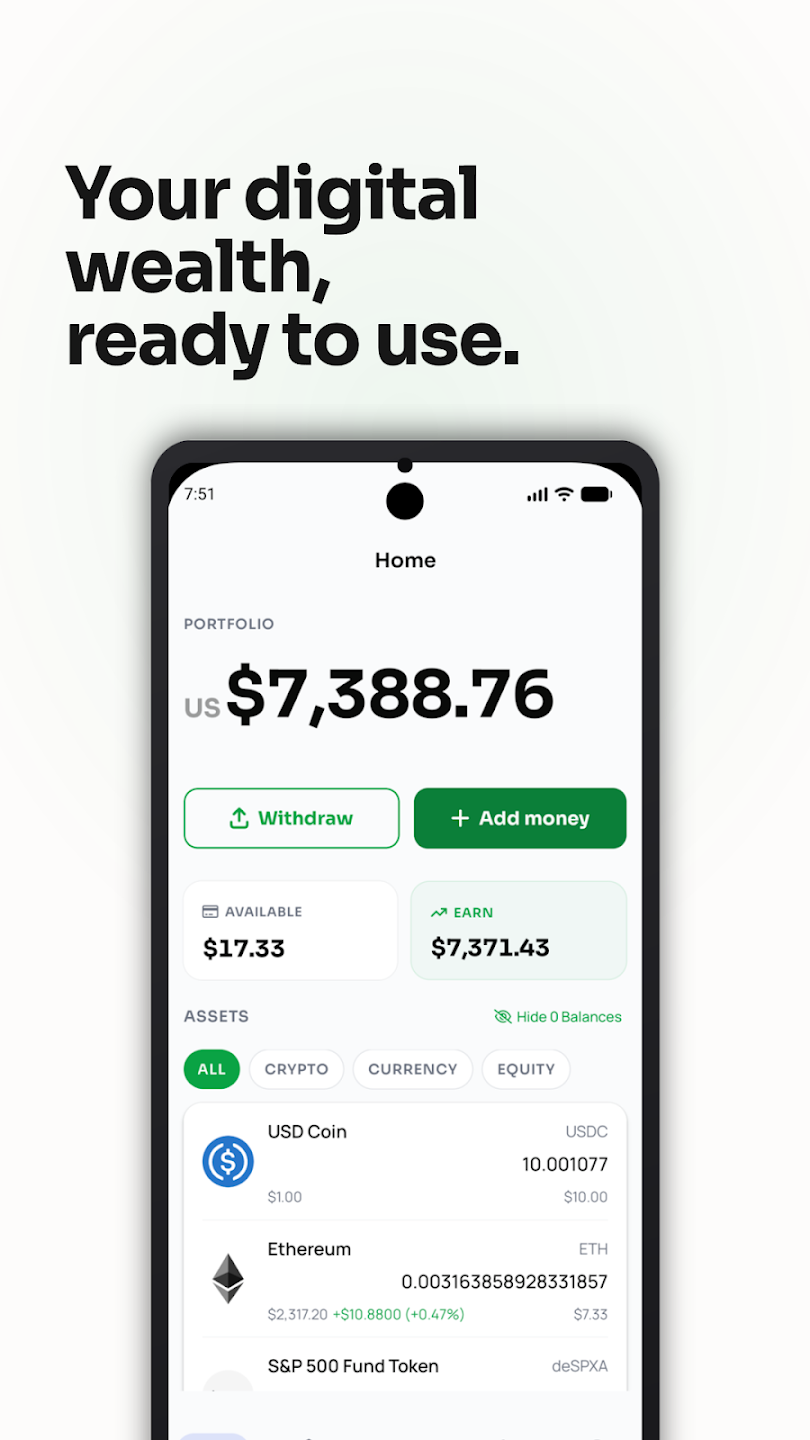
Mo is a mobile-first stablecoin application designed for global money movement. Built on the Base network, it provides users with a non-custodial environment to receive, save, and send digital assets like USDC and EURC without the typical technical complexities of blockchain interaction.
What Mo Wallet is structurally
Mo is built using the Coinbase Developer Platform (CDP) Embedded Wallet infrastructure. This architecture allows Mo to offer a non-custodial experience—where users retain full ownership of their assets—without requiring the management of traditional 12-word recovery phrases.
The application utilizes the Base network, an Ethereum Layer 2 solution, which provides the underlying settlement layer for all transactions. By leveraging CDP’s “Agentic” and “Embedded” wallet standards, Mo abstracts the friction of network selection and gas management, presenting a unified financial interface to the user.
How it works in practice
Mo operates as a “stablecoin superapp,” integrating several financial primitives into a single mobile interface.
Gas-Free Transactions
A defining feature of Mo is its use of the CDP Paymaster, which sponsors the transaction fees (gas) for users. This means that users do not need to hold ETH or other native network tokens to send or receive stablecoins. The cost of network interaction is abstracted away, mirroring the experience of traditional fintech applications.
Identity and mo.box
Every user receives a unique, human-readable identity in the form of a mo.box handle (e.g., mo.box/yourname). This decentralized identifier (DID) serves as a public payment address, allowing anyone to send funds to the user by visiting their profile link or scanning a QR code, without needing to copy complex hexadecimal wallet addresses.
Yield Generation (ERC4626)
Mo provides access to yield-bearing “Vaults” based on the ERC4626 token standard. Users can deposit their stablecoin balances into these vaults to earn variable APY from underlying protocols like IPOR, Morpho, and YO. The application provides real-time tracking of positions and accrued interest.
Real-World Assets (RWA)
The platform supports institutional-grade tokenized assets, including deSPXA, which provides on-chain exposure to the S&P 500. This allows users to diversify their stablecoin holdings into equity-linked products directly within the wallet interface.
Fees and pricing mechanics
Mo utilizes a transparent fee structure for its core movement and conversion services. While internal wallet-to-wallet transfers are generally subsidized or covered by Mo Points, external operations carry specific costs.
| Operation | Fee Mechanism |
|---|---|
| Internal Transfer | $0 |
| On-Ramp (Fiat to USDC) | Typically 100 bps (standard tier) |
| Off-Ramp (USDC to Fiat) | Typically 100 bps (standard tier) |
| Asset Swaps | Integrated DEX spread + 10 bps (via OKX) |
Users can offset these fees using Mo Points, which are earned through activities like referrals. 1 Mo Point typically equals $0.01 of fee credit, covering the cost of moving $1 of value.
Limits, eligibility, and availability
Mo is designed for global availability, with its fiat on/off-ramp capabilities powered by Bridge. This integration enables bank payouts and virtual accounts in over 80 countries, including major corridors in the US, Europe, Latin America, and Africa.
The wallet supports multiple assets on the Base network, including:
- USDC: Primary dollar stablecoin.
- EURC: Euro-denominated stablecoin.
- cbBTC: Wrapped Bitcoin on Base.
- ETH: Native network asset.
Access to fiat-linked features, such as virtual bank accounts for receiving platform payouts, requires a verification process handled by Mo’s regulated partners.
Tradeoffs, risks, and limitations
While Mo abstracts blockchain complexity, it is a non-custodial platform. Users are responsible for their account access (via email/biometrics), and losing access to the primary authentication method can lead to fund recovery challenges.
The yield products offered through the vaults carry variable rates and are not guaranteed. APYs fluctuate based on market demand and the performance of the underlying DeFi protocols. Furthermore, while the use of stablecoins like USDC mitigates volatility against the US Dollar, users holding non-USD assets like EURC or deSPXA remain subject to currency and market price fluctuations.