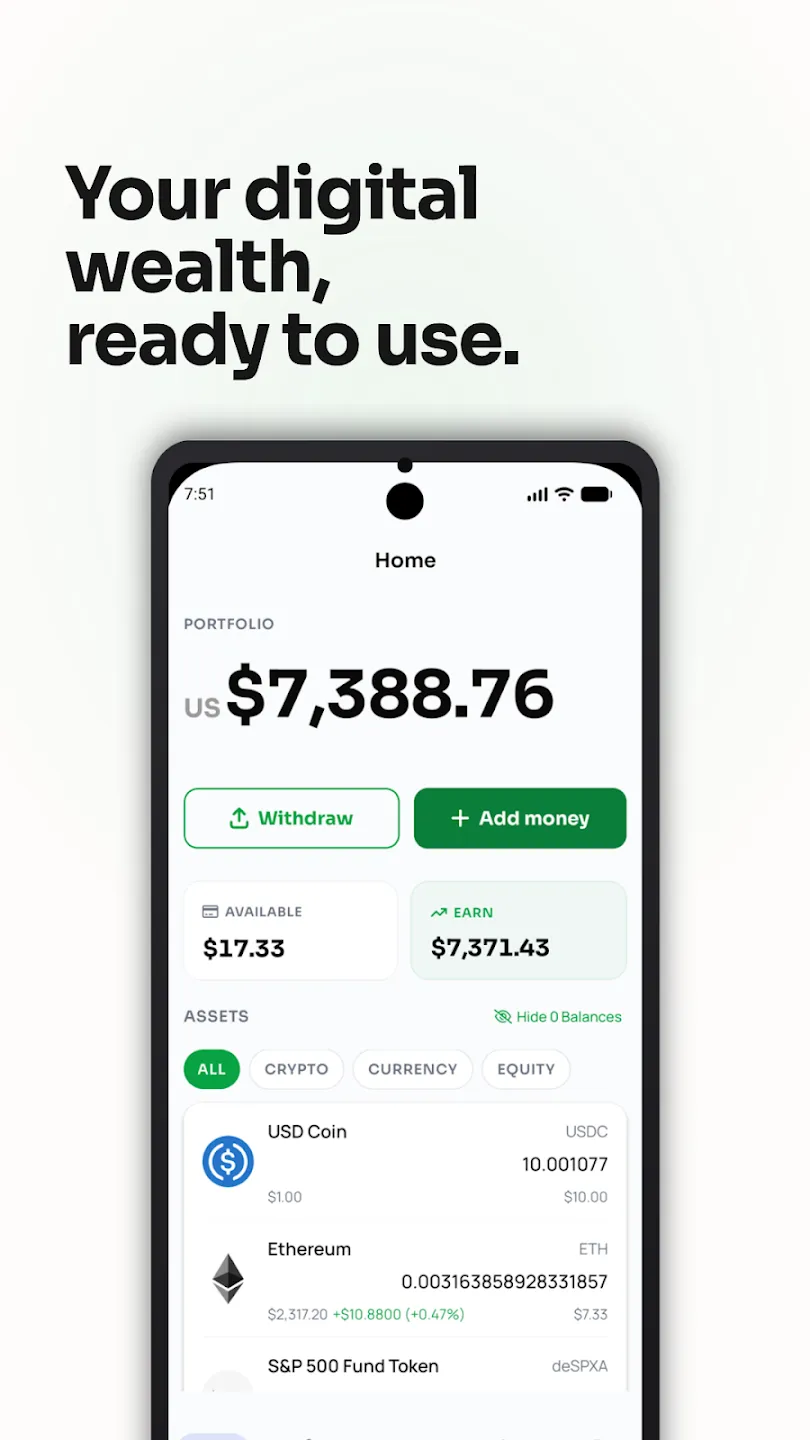
A non-custodial wallet allows you to maintain direct and exclusive control over your digital assets. You hold the cryptographic private keys required to authorize transactions, meaning no third party acts as a gatekeeper to your funds.
Self-custody is the foundational principle of blockchain technology. It prioritizes individual sovereignty over the convenience of a managed service.
What is a non-custodial wallet in plain terms?
A non-custodial wallet is a tool that allows you to interact directly with a blockchain. Instead of a username and password, you possess a seed phrase that functions as the master key to your assets.
When you use a non-custodial wallet, you are the only person who can move your money. If you lose your seed phrase, there is no way to recover your funds through a third party.
The software acts as an interface that manages your cryptographic signatures. It does not hold your money; it only stores the keys used to prove ownership on the public ledger.
Why does a non-custodial wallet exist?
Non-custodial wallets exist to eliminate the risks associated with third-party intermediaries. By holding your own keys, you are protected from the potential bankruptcy or mismanagement of a centralized service.
This model also enables permissionless finance. You do not need approval from a provider to send a transaction, and you can access your funds 24/7.
It provides a way to interact with global financial infrastructure without relying on local banking rules. This is essential for users who value privacy and independent control over their capital.
How a non-custodial wallet works in practice
When you set up a non-custodial wallet, the software generates a unique private key and a corresponding public address. The private key acts as a digital signature that proves to the blockchain you have the right to move assets.
For example, when you want to send 500 USDC, your wallet app uses your private key to sign a transaction message. This message is then broadcast to the blockchain network for verification by miners or validators.
The wallet software acts only as an interface; it never actually holds your money. Your assets live securely on the blockchain, and your keys are the only proof of ownership.
What it is not (boundaries and confusions)
A non-custodial wallet is not a physical vault or a digital container that stores your actual tokens. It is a key management tool that allows you to access and authorize movements on a public ledger.
It is also distinct from a custodial wallet, where a company manages the keys for you. While a custodial wallet feels like an online account, a non-custodial wallet is more like carrying cash in a physical folder.
Losing your wallet device does not necessarily mean losing your funds if you have a backup. The “wallet” is just the software interface, while the “money” is the data recorded on the blockchain.
What it changes for users and institutions
For users, self-custody provides ultimate privacy and direct control over their financial assets. It acts as the primary tool for participating in decentralized finance protocols without intermediaries.
For institutions, non-custodial solutions require robust internal governance and security protocols. Organizations must often implement multi-signature setups to prevent a single point of failure within their key management process.
This shift moves the burden of security from the service provider to the asset owner. It enables global, 24/7 financial activity that is resistant to censorship and corporate service outages.
Tradeoffs, risks, or limitations
The primary tradeoff of a non-custodial wallet is total personal responsibility for asset security. There is no room for error in key management, as no company can reverse a mistake.
If you lose your seed phrase and your device is damaged, your funds are permanently inaccessible. There is no central authority that can reset your access or recover your lost data.
Similarly, if an unauthorized person gains access to your keys, they can drain your balance instantly. Transactions on the blockchain are irreversible, making recovery impossible after a security breach or a phishing attack.
Technical complexity also poses a risk for less experienced users. Sending assets to the wrong network or address can result in a total loss of funds with no recourse for dispute.
What differs by country or regulation
The legal environment for non-custodial wallets is evolving as governments seek to monitor digital asset flows. Some regions are discussing rules that would require providers to collect identification data on wallet owners.
However, because these wallets are cryptographic tools rather than businesses, they are difficult to regulate directly. They offer a level of financial autonomy that traditional systems cannot provide.
Users should stay informed about reporting requirements in their specific jurisdiction. While the technology is censorship-resistant, users may still face tax or legal obligations related to their self-custodied holdings.
Common questions
Can my funds be frozen in a non-custodial wallet?
In general, your funds cannot be frozen by a company because you hold the keys. However, certain stablecoin issuers can “blacklist” addresses to prevent specific tokens from moving.
What is a seed phrase?
A seed phrase is a series of words that acts as the master key to your wallet. Anyone with this phrase can access your funds. Storing the phrase offline and never sharing it with others is a standard security practice.
Is a hardware wallet better than a software wallet?
Hardware wallets are typically more secure because they keep your private keys on a specialized chip. This chip never connects to the internet, protecting you from many online hacking attempts.