
Paysend is a digital payment platform for international money transfers between cards and bank accounts. The transfer product is separate from Paysend Cards and Accounts.
Cards and Accounts is closed to UK and EEA customers who registered on or after 8 June 2023. That status is from Paysend’s help page updated 22 September 2026. Customers who registered before that date can still use those wallets and cards.
How does card-to-card technology bypass intermediary banks?
Some Paysend remittances use Visa Direct or Mastercard Send. The sender funds the transfer from a linked debit card, credit card, or bank account, where that method is offered.
The payment instruction goes to the recipient’s card through the card network. A SWIFT wire collects routing details and moves through intermediary banks.
As of the Paysend product FAQ updated 16 June 2026, most card-to-card transfers arrive in under 15 minutes. Bank-account and mobile-wallet payouts typically take 1 to 3 business days. The route, the receiving bank, the time of day, and compliance checks can make a given transfer slower.
A card payout can reach someone who has a supported card and no bank account. For that payout, the sender provides a card number.
Why does Paysend use fixed fees and exchange rate spreads?
Paysend charges a fixed fee per transfer and adds a markup to the exchange rate. On corridors that use the fixed fee, the fee does not rise with the amount sent.
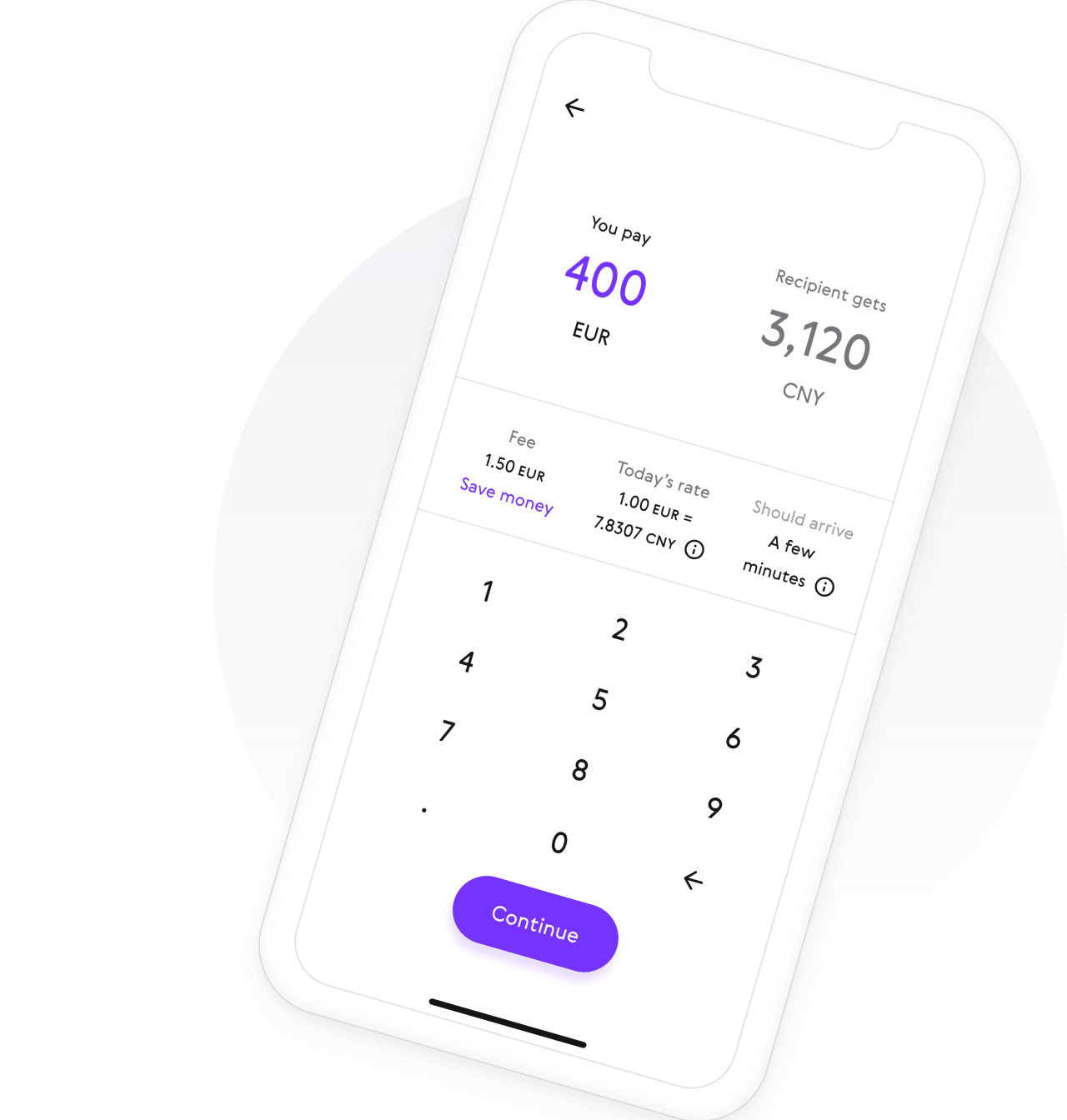
As of the Paysend product FAQ updated 16 June 2026, typical starting fees are $2 from the United States, £1 from the United Kingdom, €1.50 from the EU, and CAD $3 from Canada. A help article updated 29 September 2026 says the exact fee still depends on the sending country and the payout method. Some corridors add a local fee on top of the fixed charge.
The markup is a spread over the mid-market rate. The app and the website show that rate, and the amount the recipient is due, before the sender confirms.
Paysend does not add its own recipient fee. The sender’s bank can still charge for the funding card, and the recipient’s bank or card issuer can charge under its own card terms. Occasional fee-free offers mean some transfers are charged less than the posted starting fee.
The fixed fee is only one part of the price. The exchange-rate markup and any bank charge sit outside it.
How does Paysend Link manage recipient information?
Paysend Link lets a sender start a transfer with the recipient’s mobile number. As of the Paysend product FAQ updated 16 June 2026, the recipient gets an SMS with a one-time link. The recipient enters card or account details on that link to claim the funds.
The sender does not have to collect the recipient’s account number first. The recipient submits those details to Paysend.
That split keeps the account data with the person who controls the account. It also limits the transfer to countries where a phone-number payout is offered.
How do regulatory frameworks safeguard Paysend customer funds?
In the UK, Paysend Plc is an electronic money institution. The UK product FAQ updated 16 June 2026 says the Financial Conduct Authority authorises Paysend Plc under firm reference 900004. That permission covers issuing e-money and providing payment services. In the EEA, Paysend EU Designated Activity Company is a licensed e-money institution under the Central Bank of Ireland, firm reference C443739.
UK and EEA terms say customer balances on a cross-border transfer are safeguarded at a partner institution, apart from company funds. Those balances are outside the UK Financial Services Compensation Scheme and the Irish Deposit Guarantee Scheme.
In the United States, Paysend US LLC, NMLS ID 2048617, holds money-transmitter licenses in most states. The December 2025 US consumer terms name Central Bank of Kansas City, NMLS ID 804984, as the transmitter in New York, California, and Massachusetts. Paysend does not hold the funds in those states. The US product FAQ updated 16 June 2026 still names that bank where Paysend US LLC is not the transmitter. The same terms gave notice on 21 February 2026 of a later bank change for those three states, effective no earlier than 23 March 2026.
What are the practical limitations of the service?
The Paysend product FAQ updated 16 June 2026 says Paysend can pay out to more than 170 countries. Send-from countries named there are the United Kingdom, the EU and EEA, the United States, and Canada. Payout can be a bank account, a card, a mobile wallet, cash, or a phone-number link, and the set differs by destination.
Every sender goes through Know Your Customer checks and provides a government ID. Limits depend on a verification tier named Basic, Advance, or Ultimate, and on the sending country. The December 2025 US terms cap Arizona at $999.99 and Florida at $2,999.99 across the daily, monthly, and biannual windows. The same terms say Paysend may change those limits.
A help page updated 21 September 2026 says the maximum on one transfer usually cannot be raised, so a larger amount has to be split. Raising a tier starts with a photo ID. A further increase asks for proof of address and a source-of-funds statement, as of the help page updated 23 September 2026.
A corridor can be listed and still fail a tier cap, a state cap, or a missing payout method. Paysend remains a remittance service bounded by those corridor and limit rules.
Common questions
How long does a card-to-card transfer take?
The Paysend product FAQ, updated 16 June 2026, says most card-to-card transfers arrive in under 15 minutes. Bank-account and mobile-wallet payouts typically take 1 to 3 business days. The route, the receiving bank, and compliance checks can make a given transfer slower.
Is Paysend a bank?
No. In the UK, Paysend Plc is an electronic money institution authorised by the FCA under firm reference 900004. In the United States, Paysend US LLC is a money transmitter. The service does not provide overdrafts, lending, or government-insured savings accounts.
Can I send money without a card?
Paysend accepts debit cards, credit cards, and bank-account funding where the sending country supports them. Payout can be a card, a bank account, a mobile wallet, cash, or Paysend Link. Which of those methods exist depends on the country pair.
What are the common misconceptions about Paysend?
“Fixed fees always make it the cheapest option.” The total cost includes the fixed fee and the exchange-rate markup. On a small transfer, a percentage fee paired with a tighter rate can cost less than a low fixed fee plus a wider spread.
“Card transfers are identical to bank transfers.” Card payouts use networks such as Visa Direct and Mastercard Send. Bank payouts use account rails and, as of June 2026, typically take 1 to 3 business days.
“Safeguarded funds are protected by the FDIC.” Paysend is not an FDIC-insured bank. UK and EEA e-money balances are safeguarded and sit outside the Financial Services Compensation Scheme and the Irish Deposit Guarantee Scheme. In New York, California, and Massachusetts, the December 2025 terms say an FDIC-regulated partner bank executes the transfer and Paysend does not hold the funds.