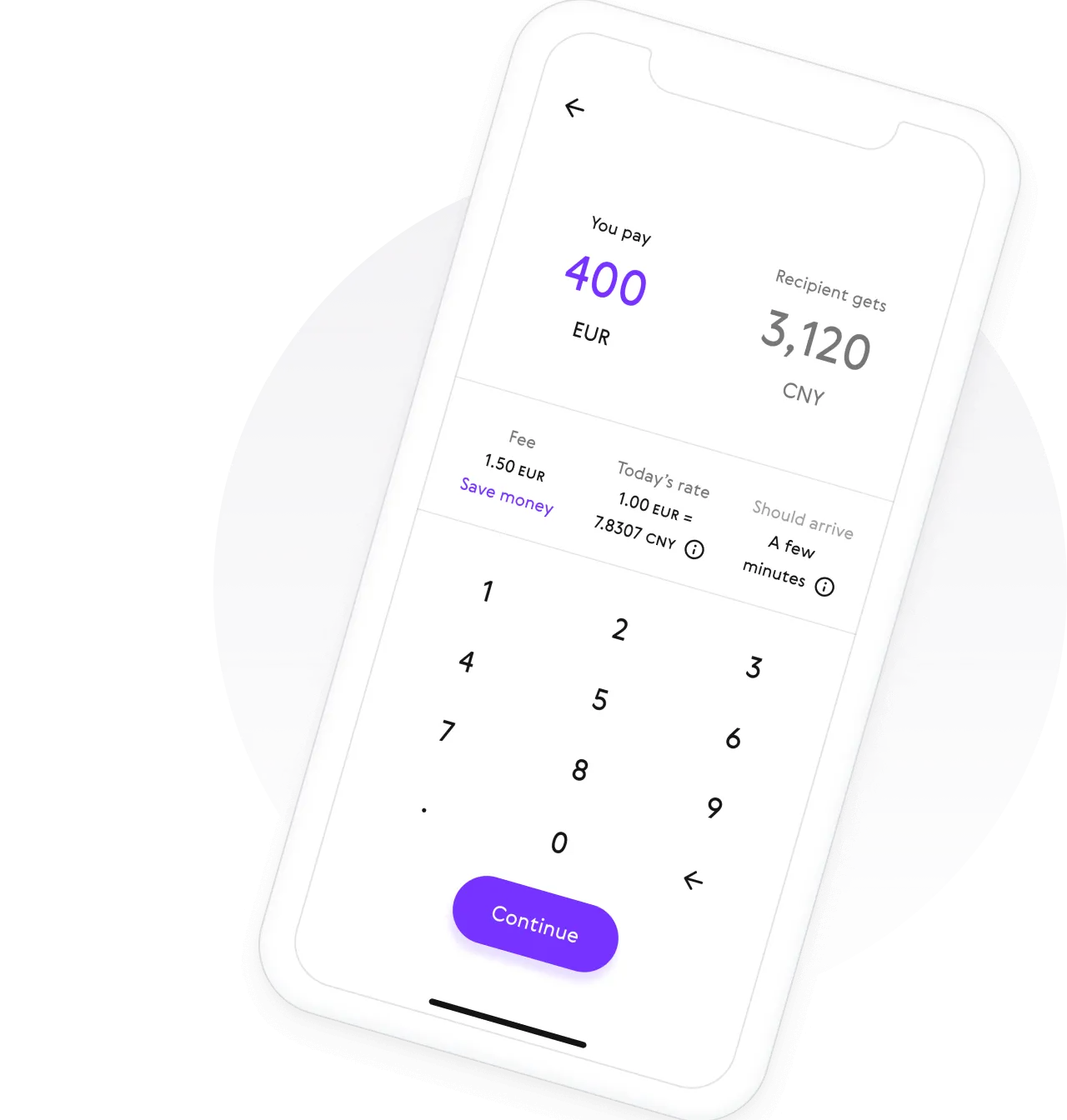


A stablecoin neobank is an app that shows a balance the way a bank account does, while the balance is a stablecoin on a blockchain or a claim on a custodian that holds one.
The screen can show dollars. The legal object behind the screen is not automatically a bank deposit. The sections below separate the ledger, the bank rail, and the card network. Figures are as of October 2026.
What is a stablecoin neobank in plain terms?
A bank ledger is a private database. A deposit is a liability of the bank. A stablecoin neobank usually records the customer’s balance as a token on a public chain, or as an entry at a custodian that holds the token.
The app still needs a way to accept bank payments and to pay people who do not hold the token. That work sits at the on-ramp and the off-ramp. The token ledger does not replace those steps.
Circle’s Q2 2026 results reported USDC in circulation of $73.3 billion at quarter-end. That figure is the outstanding supply of one stablecoin. It is not a count of neobank customers, and it is not a deposit total at a bank.
The app can look like a checking account. The balance is a token position or a custody claim unless a bank has issued a deposit.
Why do these apps sit next to bank accounts?
Cross-border bank payments still pass through correspondent accounts and business-day windows. A token transfer can move when the chain is producing blocks, including hours when banks are closed.
That difference is the reason the apps exist as a separate model. They take a problem described in remittance and cross-border transfers and record the customer’s balance on a chain instead of only on a bank ledger.
The chain does not, by itself, deliver local currency into a bank account in another country. An off-ramp still converts or pays out. The speed of the token hop and the speed of the payout are different clocks.
The apps exist because the token can move outside banking hours. The payout still depends on a local partner.
How a balance moves from a bank rail to a token
A customer can receive a bank payment on virtual account details, such as a U.S. routing number and account number, or an IBAN. Those numbers belong to a partner bank or a payment institution. The incoming payment is a bank transfer.
The platform then converts the fiat amount to a stablecoin, or credits a stablecoin balance it already holds against that payment. The reverse path burns or transfers the token and sends fiat out through a local payment.
On a card, the purchase usually authorizes on the card network in fiat. The stablecoin is converted before settlement or when the authorization is approved. The merchant is paid by the acquirer. The token ledger is adjusted to fund that card settlement.
This is the same banking boundary described in how stablecoin systems interact with banking. The token moves on-chain. The bank payment moves on the bank rail. The card message moves on the card network.
Three ledgers update. They do not update in the same second.
What a stablecoin neobank is not
It is not, by itself, an insured depository. The FDIC insures deposits up to $250,000 per depositor, per insured bank, for each ownership category. The same brochure lists crypto assets among products that deposit insurance does not cover.
A token balance is not a claim on the FDIC because it is a token. Insurance applies when the funds are a deposit at an insured bank and the account meets the ownership rules. A sentence in an app that says “bank partner” does not, by itself, place the token balance inside that cover.
It is also not a stablecoin issuer. The neobank is a customer of the issuer, or a holder of the issuer’s token. Reserve assets sit with the issuer’s structure, which is covered in stablecoin reserves.
The app is a distribution and custody layer. The insurance question and the reserve question are separate.
What card settlement changes
Bank deposits in the United States are typically insured by the FDIC up to $250,000 per depositor, per insured bank, for each ownership category, subject to account structure and eligibility.
Some of these apps issue debit or charge cards. The cardholder taps a card. The network routes an authorization. The issuer or its processor settles with the network in fiat.
On October 16, 2026, Marqeta announced an expanded collaboration with Coinbase for stablecoin-backed cards. The release says Marqeta already issues crypto-backed cards for Coinbase. It assigns custody and fiat conversion to Coinbase, on-chain settlement to Base, and card issuing plus bank and network relationships to Marqeta. The FDIC brochure lists crypto assets among products that deposit insurance does not cover.
A token holder’s protection depends on the stablecoin reserve structure and the platform’s custody setup.
The release describes the split of work. It also contains forward-looking statements about the collaboration. The role split above is the assignment in that announcement.
Card settlement still ends on the card network. The token conversion is a funding step, which how stablecoin cards work separates from the merchant’s receipt of fiat.
The card makes the token spendable at card merchants. It does not turn the token into an FDIC-insured deposit.
Tradeoffs, risks, or limitations
Custody is the first split. If the platform holds the keys, the customer has counterparty exposure to that platform, the same exposure described in custodial wallets. If the customer holds the keys, the loss of the key is the loss of the token.
Peg risk sits with the stablecoin. A delay between a card purchase and the liquidation of the token, or between an off-ramp request and the fiat payout, is a window in which the token price and the fiat amount can diverge.
On-ramps add compliance checks and can reject a payment. Off-ramps add FX spreads in non-dollar corridors. Those spreads are the cost described in why FX dominates remittance cost.
A chain halt, a custodian halt, or a bank partner halt stops a different piece of the path. The app can be available while one of those three is not. Stablecoin transfers can settle quickly on-chain.
On-ramps and off-ramps can still add delays, compliance steps, and FX markups.
In non-USD corridors, FX spreads can be a major driver of total cost. See why FX is the real cost in remittance.
Where cards fit into the model
Some stablecoin neobanks offer debit cards or credit-like cards.
In most cases, a card purchase settles in fiat on the card network.
The stablecoin conversion happens before settlement or at authorization time.
On October 16, 2026, Marqeta announced an expanded collaboration with Coinbase for stablecoin-backed cards.
Marqeta said it already issues crypto-backed cards for Coinbase.
The announcement assigns custody and fiat conversion to Coinbase, and on-chain settlement to Base.
The announcement assigns card issuance and the bank and network relationships to Marqeta.
For mechanics, see how stablecoin cards work.