
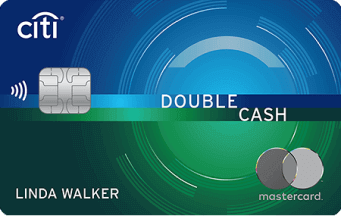
The Citi Double Cash® Card is a credit card product that implements a rewards engine based on the completion of the spending cycle. It is issued by Citibank, N.A., and is one of the most established products in the flat-rate cashback market.
Unlike most cards that award the full cashback at the time of purchase, the Double Cash card uses a “two-part” system. This mechanism is designed to incentivize both card usage and responsible repayment behavior.
What the Citi Double Cash Card Is (Overview)
The Citi Double Cash is a Mastercard credit card. It provides cardholders with a revolving credit line and a rewards program that effectively offers 2% cashback, but with a specific conditional logic.
The product is defined by its lack of an annual fee and its straightforward “all-in-one” rewards structure. It excludes the use of rotating categories or tiered rewards based on merchant types, opting instead for a system that looks at the dollar amount of purchases and the dollar amount of payments made.
As a Mastercard, the card operates on a global network, making it usable at millions of merchants. However, the rewards program is a proprietary mechanism managed entirely within the Citi financial ecosystem.
How the “Earn on Buy, Earn on Pay” Mechanism Works
The Double Cash rewards engine is structured as two distinct 1% accrual phases. Both must be completed for the user to realize the full 2% value.
-
Phase 1: Earning on the Purchase (1%) When a user makes an eligible purchase, the system automatically awards 1% in cashback. This appears in the rewards balance once the transaction is authorized and settled. This is the “accrual” phase.
-
Phase 2: Earning on the Payment (1%) The second 1% is awarded when the user pays for those purchases. The system tracks the dollar amount of payments made to the card. Every dollar paid toward the balance triggers an additional 1% in rewards. This is the “completion” phase.
-
Total Calculation Rules To earn the second 1%, the payment must be made toward a balance that was generated by a purchase. Payments made toward interest charges or fees do not trigger the 1% reward. Furthermore, the user must make at least the minimum payment due on time to remain eligible for reward accrual.
-
Reward Exclusion Filters The system automatically excludes specific transaction types from both phases. These include cash advances, balance transfers, and account fees. If a user returns an item, the system subtracts the initial 1% from their balance, and that purchase can no longer trigger the 1% “payment” reward.
How Rewards Are Managed and Redeemed
In recent years, the Citi Double Cash has integrated its rewards with the “Citi ThankYou®” ecosystem. This integration has changed how rewards are calculated and moved.
Translation to ThankYou Points
Instead of “cents” of cashback, the system now awards 1 ThankYou Point for every $1 spent and 1 ThankYou Point for every $1 paid. In the Citi system, 100 ThankYou Points are typically equivalent to $1.00 when redeemed for cash.
Redemption Options
The most common redemption path is “Cash Back,” which can be delivered as a statement credit, a direct deposit into a bank account, or a physical check. Because the rewards are now ThankYou Points, they can also be used for gift cards or travel through the Citi portal, though the value per point may vary in those scenarios.
Point Portability and Partners
For users who hold other Citi premium cards (like the Citi Strata Premier), the points earned on the Double Cash can be combined. This allows the points to be moved to external airline and hotel transfer partners, which is a significant system-level feature for users who manage multiple financial products.
How the Card Generates Costs and Risks
The Double Cash card is an unsecured credit product, meaning the issuer takes on the risk of non-payment. This risk is managed through several fee and interest mechanisms.
Interest and APR Logic
The card carries a variable APR that is applied to any balance not paid by the due date. Because the rewards engine encourages “paying for purchases,” it implicitly encourages users to avoid interest. However, if a user only pays the minimum, the interest charges will accrue daily and will be significantly higher than the 1% “payment” reward they receive.
Foreign Transaction Fees
The system applies a 3% fee to any purchase made in a foreign currency or outside of the United States. This 3% fee creates a net loss for the user, as it is larger than the 2% total reward earned across both phases of the transaction.
Balance Transfer Offers and Fees
The Double Cash frequently includes introductory offers for balance transfers (e.g., 0% interest for 18 months). While the interest is suppressed, the system charges a flat fee (often 3% or 5%) for the transfer itself. It is important to note that balance transfers do not earn the “1% on buy” or “1% on pay” rewards.
Practical Implications of a “Double” Reward System
The dual-phase mechanic changes the timing of when a user receives the value for their spending.
Encouraging Debt Repayment
The primary practical implication is the psychological and financial nudge to pay off balances. By making the second half of the reward conditional on payment, the system aligns the user’s interest (earning rewards) with the bank’s interest (getting paid).
Tracking Complexity
Compared to a “2% at the point of sale” card, the Double Cash requires more tracking. A user might see their 1% purchase reward in one billing cycle and their 1% payment reward in the next, depending on the timing of their payment.
Comparison to Competitors
In a competitive market, the Double Cash is often used as a benchmark. Its “unlimited” nature makes it a stable choice for high-spend individuals who do not want to manage caps or categories. However, the 3% foreign fee and the payment condition make it less suitable for international travelers or users who carry long-term debt.
Tradeoffs, Risks, and Limitations
The Citi Double Cash has specific system constraints that impact its utility.
- Minimum Payment Requirement: Failing to make a minimum payment on time can lead to the forfeiture of reward accrual for that cycle.
- Reward Expiration: In the current system, ThankYou Points do not expire as long as the account is open. However, if the account is closed, points must typically be redeemed within a short window (e.g., 60 days).
- No Introductory Purchase APR: While it often has a balance transfer offer, it rarely offers 0% interest on new purchases. This makes it a poor choice for financing a large upcoming expense.
- Credit Approval Gate: Citibank’s underwriting is traditionally conservative, often requiring a “good” or “excellent” credit history for approval.
Regional and Regulatory Differences (United States)
The card is a U.S. consumer financial product. It is subject to the CARD Act, which limits how banks can charge late fees and how they must apply payments to high-interest vs. low-interest balances.
Internationally, Citibank operates in many markets, but the “Double Cash” 2% logic is largely a result of the U.S. interchange fee environment. In other countries, Citi-issued cards often have much lower base reward rates due to local regulatory caps on what merchants can be charged for transaction processing.
Common Misconceptions About the Double Cash Card
“I get 2% back immediately.” No. You get 1% when you buy and 1% when you pay. The full 2% is realized only after the bill is settled.
“I get 1% on my interest payments.” This is a standard misconception. The system’s logic for the “payment” reward only looks at the amount paid toward the purchase balance. Payments for interest, late fees, or other bank charges do not earn rewards.
“I can’t transfer rewards to airlines.” As a standalone product, the Double Cash has limited transfer options. However, when paired with other Citi ThankYou-earning cards, the points become part of a larger, more portable ecosystem.
“It’s a good card to use on vacation abroad.” Due to the 3% foreign transaction fee, using this card outside the U.S. usually costs more than the 2% rewards it generates.