
Cross-border card spend has to convert a balance into the merchant’s currency and then clear on a card network. A self-custodial app keeps the stablecoins under the account holder’s keys until that spend happens.
Tuyo is that kind of app for USDC, with fiat services and the card issued through partners. The card guide is the fee source used here. The marketing card page disagrees with the guide on the starting daily limit and on whether a physical card exists yet.
At a glance
- Structure: Self-custodial wallet. Tuyo states that it does not take custody of the keys.
- Card network path: USDC on Base. Other tokens are converted inside the app.
- Fiat rails: Deposits, withdrawals, and account numbers are handled by regulated partners.
- Spending: Visa card, Apple Pay, and Google Pay. The marketing page says the physical card is still “coming soon.”
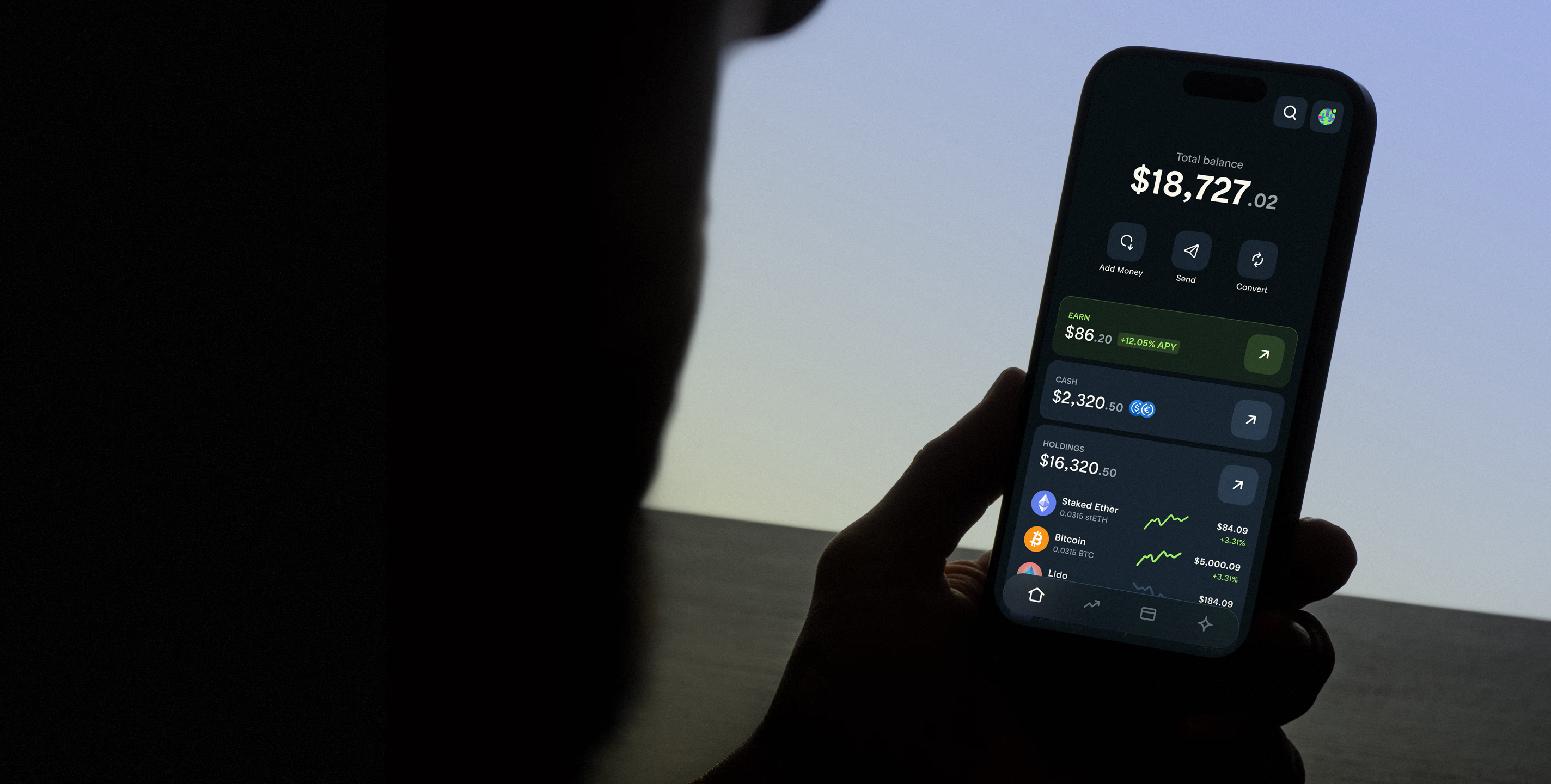
- Yield: Earn vaults for USDC, EURC, ETH, or BTC, with the APY shown in the app rather than as a fixed rate.
How the self-custodial banking model works
Tuyo is an interface for USDC and, on the earn side, EURC. It is not a neobank that holds customer funds as deposits on its own ledger. The card guide says funds stay in the user’s control until the moment of spend.
The mechanism of private key ownership
Creating an account generates a wallet whose keys the user controls. The FAQ states that Tuyo cannot be the custodian, and that crypto can be withdrawn to another wallet even if KYC fails or the account is restricted. A lost recovery phrase is not replaced by the company.
If the company stopped operating, the guide’s recovery note says the address can still be reached with the recovery phrase, at the user’s own risk. That is the self-custody tradeoff against a freeze by the app operator. The Visa card and the partner account numbers can still be turned off under the program rules even when the on-chain balance remains.
Bridging legacy fiat to on-chain assets
Fiat deposits, withdrawals, and account numbers are provided by regulated partners, according to the FAQ. The current guide does not reprint a country list of IBANs. A deposit that arrives through those partners is converted into the stablecoin balance the card spends.
The card and the account services run on Base. The FAQ lists deposits and withdrawals on Base, Ethereum, Arbitrum, BNB Smart Chain, and Polygon. A marketing FAQ also names Optimism. Tokens sent on a network the app does not list do not show up, while the assets can remain at the address.
Mechanics of global payments and spending
Spending and transfers are different flows. Transfers move tokens between wallets. Card spend converts USDC on Base into the merchant charge.
Fees on card spend
The card guide lists no issuance fee and no monthly or yearly fee. USD purchases inside the United States are 0%. A 1% FX fee applies when the currency is not USD, and a separate 1% abroad fee applies on any purchase outside the United States. Both can apply together, for a total of up to 2%.
The guide’s limit line says new cards start at up to $50,000 a day and can rise to $100,000 and then $200,000 as spend history builds. The marketing card page instead shows a $10,000 daily start that increases with use, next to a “$200k limit” headline. ATM withdrawals are supported at Visa ATMs, up to $250 per withdrawal on the guide.
Mobile wallet and physical card
Apple Pay and Google Pay are listed on both the guide and the marketing page. The marketing page says the physical card is coming soon and that the card lives on the phone until then. Compatible spend is USDC on Base after any in-app conversion.
A card rejection is final when the app marks it rejected. A rejection does not move the self-custodial wallet balance. Trading inside the app carries a 0.25% volume fee, while the FAQ says bridges and stablecoin-to-stablecoin trades are exempt and can still pay network fees.
Yield generation through DeFi vaults
Tuyo Earn takes USDC, EURC, ETH, or BTC. The FAQ says each vault shows a live APY and that the rate varies by strategy. No fixed APY is published on that page.
What the current guide says about yield
The help center does not name a specific lending protocol in the FAQ entry used here. The yield is whatever the selected vault quotes in the app. It is not a bank deposit rate and it is not insured.
Where the card balance sits relative to earn
The card spends USDC on Base. Whether a vault balance is available to the card is an in-app setting, not a second currency. A loss inside a vault is a protocol loss, separate from the 0% to 2% card fee schedule.
How the TUYO rewards program incentivizes activity
The public FAQ says Tuyo expects to launch a token in 2026 and will announce plans only on official channels. That sentence is an expectation, not a conversion rate from points to a token. No points-to-token ratio is published in the card guide.
Card fees and earn APYs are the numeric programs that are actually specified. Referral or points campaigns, when they run, need their own terms. They are not part of the 1% FX and 1% abroad schedule.
What operational tradeoffs apply to self-custody
Self-custody removes Tuyo as the holder of the asset keys and leaves technical and user-side failure modes in their place.
Technical and smart contract risk
Wallet software, the Base contracts, and any earn vault can fail. Those losses are not covered by FDIC or SIPC insurance. Partner fiat balances, before conversion, sit with the partner under that partner’s rules, which is a different legal object from USDC in the wallet.
Regulatory and jurisdictional focus
The card guide prices USD spend in the United States at 0% and prices non-USD and non-US purchases separately. Availability of the card, the earn vaults, and the partner account numbers depends on the jurisdiction and on KYC. A rejected card application leaves the wallet usable for crypto withdrawal.
Responsibility for the recovery phrase
There is no issuer reset for the recovery phrase. The guide points readers to the recovery-phrase note and says recovery is at their own risk. The company can still disable the card and the app even when the chain balance remains.
Common questions about Tuyo’s stablecoin app
Is Tuyo a bank?
No. Tuyo is a self-custodial wallet interface. Account numbers and the card come from licensed partners.
What does a non-USD purchase outside the US cost?
The card guide adds 1% FX and 1% abroad, for up to 2% on that purchase. A USD purchase inside the United States is listed at 0%.
Is the balance FDIC insured?
No. USDC in the self-custodial wallet is not an FDIC-insured deposit. The FAQ distinguishes that balance from fiat held at a partner before conversion.
Why certain misconceptions about stablecoin banking persist
Misconception: “Tuyo can freeze the USDC.”
The FAQ says the wallet is self-custodial and that crypto withdrawal remains available even when KYC fails. Tuyo can still turn off the card and the app interface. Those are different controls.
Misconception: “The daily limit is one number.”
The card guide says up to $50,000 a day for new cards, rising toward $200,000. The marketing card page shows a $10,000 daily start and a $200,000 headline. The app is the limit that authorizes.
Misconception: “Digital dollars are bank deposits.”
USDC is a private stablecoin on Base in this product. It is not a chartered-bank deposit, which is the distinction drawn in why stablecoins are not risk-free cash.
Compare the card fee schedule with managed custody platforms when the question is who holds the keys, and with bank-account yield when the question is deposit insurance.